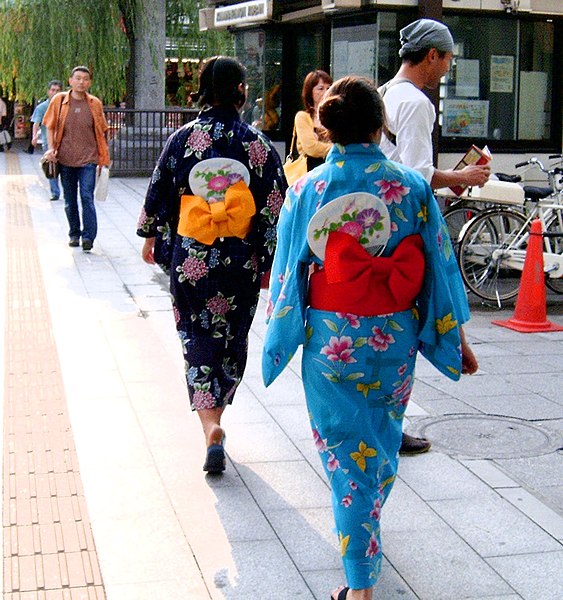
this cutie was taken by Crazyegg95 in 2005 and is from flickr

lizardrinking
for the main blog of poetry, whimsy and maybe beauty, now http://theheartbeatsoftly.wordpress.com/


Saturday, 8 November 2008

Godzilla vs Daibutsu; A daytrip to Kurihama and Nokogiri


Browsing the Web it seems that quite a few people have paid a visit to Kenkonzan or Nihonji , or Kenkon temple or Nihon temple. They are actually two different names for the same thing, and most foreigners seem to know it as Nihonji. Actually, even though it is beautiful, and has carved itself out a little bit of webspace, it is not that well known, as shown by the conversation I had with some fellow hikers in the Nokogiri ranges where the temple resides. Despite the sign staring at me and directing me towards the temple (well, I'd climbed masses of stairs, and now it was indicating I had to go down, which meant that at a later point I would have to go up again. What can I say? I was hoping for respite) I thought I would check with them:

Is that the way to Nihonji?, asks I.

Nihongo? says them (meaning, the Japanese language?)

Unuh, Nihonji, and I point to the sign which says Nihonji.

Aaah, Nihonji, they say.

Anyway, this is what my post has got going for it in addition to many of the features also featured in the blogs I have listed below

liverputty
Around Japan
tyronne in tokyo
japan weblog.
Japanese/English

I approached the temple from the backside (hee-hee).
I saw Godzilla first.
I saw a kettle and a bulldozer which I have not seen featured on other blogs.


The north entrance to Nihonji


But first, lets give credit where credit is due. Following coinlockerbaby's advice at the Lonely Planet Forum site, I went out to Kurihama to visit the flower park and see the gigantic statue of Godzilla, and I then took the ferry across Tokyo Bay to Kanaya, from where I climbed Nokogiri to visit Nihonji. Oh, how shall I lay this out? Three separate blog entries on the same day? Perhaps, but then people would read them backwards. Let's start with Practicalities (and end with them, actually. Herewith lies the one and only subtitle!)

Practicalities

I was relatively poor. I wanted to go to Kurihama to see Godzilla (and possibly some flowers as seen in this link in the Kurihama Hana no Kuni, or Kurihama Flower World), and to then cross Tokyo Bay via ferry, land in Kanaya, climb Nokogiriyama and see Nihonji and then return to Tokyo via Hamakanaya JR (Japan Rail). I ended up returning via Hota Station, but that is for later in the post. Well, the quickest way to do all that is by limited express on your return, and get off at Keikyu Kurihama on the way down, which of course also means taking the Keikyu line (from Shinjuku, or elsewhere).

However, I didn't read the maps I had very well, so it incorrectly seemed that Kurihama was the best station at which to get off, and as I was using the Holiday Pass (horidei pasu) I was limited to local JR trains anyway. The result of this is that everything took a long time, but only cost ¥2300, plus the extra ¥680 from Hota to Kisarazu, and the ferry fare (more about that later). This is definitely, at minimum, timewise, a day trip. I arrived in Kurihama at about 10am, and I think I'd left Tokyo before nine. With a side trip to Harajuku, I was back in Yoyogi by 8pm. It is best if you set off early in the morning if you are leaving from and wish to return to Tokyo within the day.

Holiday pass

The Holiday Pass can be bought in the areas specified above and in the picture below. It can be used on Saturday, Sunday and public holidays. It is also valid for certain holiday periods. Here is a link. It's a nice deal if you are doing a bit of travel and are on a budget. There is a children's fare as well. Of course if you have come from overseas and have a JR Rail Pass, then using that on the limited express is probably the better option.

The Holiday pass takes you as far as Yokosuka (where Kurihama is), and to Chiba as far as Kisarazu. You need to pay the extra fare from Kisarazu to Hamakanaya, or Hota, which is ¥680 (to Hota). Note this information (scroll down to Nokogiri) about Hota if you choose to come back that way. If you are also going to go out later in Tokyo, or needed to get from somewhere to get to Tokyo, the ticket is not too bad as it gives you unlimited travel within the areas detailed above and below This map below is taken from the JR East site linked to above.


These two train services: Hyperdia and Jorudan can get you train information. Hyperdia is perhaps the better one as you can nominate it to choose local services only.

Those Wiki pages posted before on Yokosuka and Chiba should also help you get your bearings somewhat, as would asking any of the staff at most information booths.

The map below is of Kurihama, and is actually better than the one I was using. Turn right when you leave the JR Kurihama station, left if you arrive at the Keikyu Kurihama train station. The second map is from Keikyu Kurihama station only, I think, which is where I initially went wrong. You will pass the Keikyu station if you are walking from the JR Kurihama station, anyway. Hopefully these maps give you some idea, but it might be best to ask someone when you get there. Keep an eye out for the Japanese characters for the park, you can see them on the bottom of the map, and keep heading towards the (ferry) port. You need to cross the big road, 134, and the road leading up to the park is pretty soon after on your right hand side. This is more clearly indicated by the second map. This is the phone number: 046-833-8282, which I called to make sure that Godzilla was still there.

Yes, yes, Godzilla is still here but there aren't any flowers at the moment.

But Godzilla's there right?

Right. But there are no flowers (dumb gaijin).

No problem. I'll see you then.


Anyway, entry is free, and I got there before 10.30, even though 10.30 -? seemed to indicate the opening hours. This website (in Japanese) has the access map to the park (first link) and the phone and fax number on the bottom lefthand corner. It was also 7-5-3 day , and so I wandered past a small shrine/temple (not the one below) with kids decked out like this:

Samukawa Jinja 7 - 5 - 3
This photo was taken by Kiri-fuda at Samukawa Jinja, Kanagawa Prefecture

The weather was perfect, and it was shaping up to be a wonderful day, despite my having turned the wrong way a few times on my way to the park. Coinlockerbaby suggests taking a taxi from the park to the ferry port to cross over to Kanaya. However, if you don't mind walking, after seeing Godzilla (which is a bit of a hike, anyway. He is in the children's playground, by the way, off to your right after about 1km or a little less, so keep an eye out for that sign. I cannot remember if it is in English as well as Japanese. It may even be called Godzilla Land, if memory serves me correctly - but don't take my word for it), keep going until you exit on the other side of the park and head down towards the port. The second map above more clearly indicates where the parking space nearest the port it (look for the P).

The park is nice, and worth the walk, and must be even nicer when there are actually flowers. As you can see Tokyo Bay from the park, you should be able to get your bearings, and from the second exit (the furthest from the train stations) the port is only about five to ten minutes by foot. There is a map outside the exit to the park (all in Japanese, but with pictures) which will also help you with directions.

The ferries go fairly regularly, but they do have different timetables for different days. Here is a link for the timetables, and a translation of the Japanese names so that you can hopefully figure out the times. Scroll down on the site linked to get the days.The ferry company, or the website, anyway, is called Tokyo Wan. You will have to pay this fare in addition to your train costs, but I think it was only ¥700 one way.


Crossing Tokyo Bay from Kurihama (Yokosuka) to Kanaya (Chiba)

As you approach Kanaya, it is easy to see the ropeway heading up into the hills, but here is a map, just the same (they help me, anyway!). I've put some English indications on it, anyway and here is a link to the original for a better picture, and if your Japanese is better than mine (which is not hard).


The one thing I cannot seem to find on the map, though it is probably there, is the Hamakanaya JR train station. It is well worth your while, if you cannot read some Japanese, to learn this kanji which is eki, or the kanji for train station. Look out for the JR, too, that's usually a give away. I will write it in this post, too, to make it clearer, but have included the image just in case other people's computers cannot read the Japanese characters:

Rather than head to the ropeway, I decided to head towards Hamakanaya train station as I thought they might have lockers (they didn't). I have an unfortunate habit of piling too much into my backpack, but it was fortunate, really, as I didn't return via Hamakanaya. To get to the station, if I recall correctly, go down the main road from the ferry heading towards the ropeway for two sets of lights, and the train station is down the road on the left after the second one. It is a small road, so look out for that kanji above, it is signposted. Or ask someone! I am relying on my sieve-like memory here. Additionally, there is a big map outside the ferry port.

If you want to climb the mountain rather than take the ropeway, this is a really good way to go. From the train station, there are small wooden sign pointers which I took to mean the way to the mountain (see how organised I am!). As said before, there is the large map outside the ferry port, too. Anyway, these signs take you through the town (very pleasant) and then under a road and to a point where it says that the Nokogiri Hiking trail starts. At one point it is a bit confusing, as it says there is 50m until the start of the trail, and another sign indicates it is right there. Keep going the 50m until you see some steps and a guide something like this.


I've included details of the walk I did on the image below. Click on the image for the larger size.


As you can see above, my way was a little circuitous, but all the more interesting for it, I feel. For some reason I thought I could cross the mountains (or granite?) peaks from the top. Even in this map it is not possible, so I'm glad I met the other hikers. At first I was disappointed that I didn't make it to the peak on the left, but considering that the steps were like this


towards the end of the journey (and no, I don't know if those in the first picture are going up or down), and that I was almost touching them with my nose while climbing them, I'm glad that I didn't climb the other peak, as I doubt that I could have done both, despite entreaties from the Julie Andrews in my mind.

This walk to the north entrance is very pretty, actually. More wild and overgrown than the approach from the Hota side, though a bit precarious as the stone steps are covered with moss and the handrails have disappeared in places. I don't know that I would want to do it on a wet day.

Nihonji is famous for a giant Kannon carved into the cliff side, a giant buddha, 1500 boasatsu sculptures, a tree growing from a "cutting" of the Bodhi tree, and a third statue which I didn't get information on unfortunately (it is always the most important pamphlet you lose. I have heaps of information on the herbs in the flower world, and cannot find the one on the temple!).

The whole area has a history dating back to 725 A.D. It was built by imperial decree and is said to be the oldest temple in eastern Japan to have been done so according to this site. Initially it was part of the Hosso sect. Its later incarnations were with the Tendai and Shingon sects. From the Edo period (1603-1868) to present day it has been affiliated with the Soto sect of Zen Buddhism. Or at least I think it has. As such, not just the temple but the surrounding cliffs are carved out (or does it occur naturally?) such as below. Actually, I have just discovered that the area was a quarry, ha-ha, which takes away from the mystery; very sheer cliffs for a quarry, but anyway, I will post on.


and when I went here (excuse the blurry picture), which was a little detour on the way to the temple (see the map above) there were these carvings on the cliff face and seats. Were the seats for prayer or concerts? Was the carving for contemplation? Or are they all there for far more prosaic reasons. I don't know. This part didn't seem to be frequented, and I kept my own company very well.

Apparently it says "safety first", followed by the name of the quarry company. I am indebted to this flickrite for the information.


From the site I linked to just above, it seems that the whole area was used for military operations during the war. I wonder if the kettle, calcified and abandonned, was from those days, and likewise the bulldozer (or from quarry days). It's hard to imagine how the bulldozer got there (but not if it had been a quarry, ha-ha). The paths at this point are not easily accessible by vehicle, and it is not surprising that it has been left there to rust. The Japanese are very animistic, and I wonder just what kind of spirits lurk in these implements forgotten. I guess that is why little altars such as the one below are built.


...and they are the hidden treats of the unbeaten path. I love that they are built to honour ancestors, and the fact that they are outside.

Well, I was getting higher and my trusty branch, picked up by the side of the path, used as a walking stick, was serving me well. Of course I had to take every little sidetrack, because I'm like that, but this was one set of mountains in which curiosity paid off, as it led you to places where you got views such as this:


Looking over Tokyo Bay from Nokogiri mountain.
For those who dig views, but maybe not temples.

It's said that you can see Mt Fuji from here on a clear day, and I am wondering, is that vague white shape...might it be...can you see it? I took a photograph of a family here, for them, though the sun was shining directly into it, so I don't know if it worked out too well. They were duly amazed that I asked them if they wanted their photo taken, and that I could do so, albeit, very poorly, I'm sure. Saaa, well, that's just the life.

Once I actually hit the temple it was business as usual. Well, not quite, as I was impressed. I cannot get an exact date on when Kannon was carved, but reports are saying it was recent, though it may be a recarving; in the way that rebuilding of temples and bridges means that timelessness is maintained through continuity. Anyway, she is one of my favourite deities, and she certainly seemed at home. As I approached the north entrance, the sun spilling on (yet more) steps, and needing to walk through an open tunnel mossy and cut through the rock, she was the first thing I saw after paying my entrance fee (a little more than ¥600, I think). I recommend coming this way for this reason, perhaps. It's actually one of the most serene and satisfying approaches to a temple that I have experienced (once I could stop gasping for air, that is).


Many people climb Nokogiri (or take the ropeway) not to see Kannon, nor the Daibutsu, but to visit the precipice, which is seen as peering into the jaws of hell (it's a very pretty hell, if so, but the view may be so named because the mountain resembles a saw, which is actually what it is named after). There is no shot of me on the precipice, as I went alone, but here is a picture from it.


Click on it to enlarge. Get any idea of how my legs were feeling?


Well, after getting caught up in the congestion that was the crowd who wished to rush to view hell, I wandered down to see Daibutsu, or the great Buddha. If you had approached from the Hota way you probably would have already done this. The signs in the temple give you two choices; to go straight to the Daibutsu, or to see the 1500 Tikai Arhats, or Buddhist carvings of boasatsu, deities, priests and so on (I think! Though maybe they are not boasatsu if I take that definition of arhat). Now, I am from Australia, and I think history can happen in an instant, so something that was carved in 1798 is old enough for me, particularly if the temple grounds themself date from the 700s, and there has been a history of both continued worship and destruction. Oh, for my pamphlet so I could tell you who (and which followers) carved them.


I would suggest going down the paths following the arhats if you are going to take the train from Hota, and not the ropeway back to Hamakanaya, rather than the path leading to the Daibutsu. You will end up at the Daibutsu, anyway. If you go see him first, you will have to reclimb those damn steps, and it ain't easy! The arhats are said to have different facial expressions, and they do. The temple's English guides also say that many were destroyed during the Meiji era. Again, according to the temple, quite an anti-Buddhist sentiment arose at this time from the government, but according to this site it was also the fact that Meiji rulers separated Shintoism and Buddhism (which probably was part of the anti-Buddhist push), and so, I guess, animostiy arose amongst the more devout followers of either religion. I have mentioned before how much I love finding Shinto shrines within Buddhist temples. Away from superstition, polytheism makes a lot of sense to me.

Well, again, referring to the aforementioned site, it wasn't just anti-Buddhists who decapitated and disfigured the arhat, but people keen on increasing their luck. This is copy and pasted from the site: "Kaizan Nakazato (1885-1944), in his well-known novel Great-Bodhisattva Pass , said of the arhat images at Nihonji: "People could always find a face that resembled somebody they loved. If they could take that head without anyone's knowing and secretly worship it, they were supposed to get their wish fulfilled." Taking heads became popular. "The headless arhats at Nihon-ji" was a common saying. In 1915 alI the carvings were repaired, but the vandalism immediately resumed".

The site just referred to, says that restoration of Nihonji, after repeated destruction and statue decapitators, didn't really begin until the 1960s, and when I visited, it seemed that the restoration of the arhat was a lot more recent than that. There were some truly beautiful statues, but many disfigured, and many with their heads seemingly glued back on, and now I understand more why a lot of them are behind fences.

After walking down to visit the many, many, many arhat (in all the nooks and crannies and winding paths) you will come to the Daibutsu. He is taller than the one at Kamakura, but apparently not the biggest stone Buddha in Japan according to some of the blogs I have visited. Who knows and is it really important? Anyway, at about 30 metres, it is pretty impressive, and also the area is a lot less crowded and more beautiful than Kamakura (though that has charm, too).


The cutting from the Bodhi tree is in this area in front of the Buddha, too, and it is a great spot for a picnic. After resting for a while, and buying some postcards (I'm old school) I chose to keep walking down the mountain, thinking I could get to the Hamakanaya train station. More fool me. You'd need to go to the ropeway, or walk back the way you came to do that, which means going up steps in either case. I decided I would try to get to the Hota train station, the stop before Hamakanaya. I had about another hour of daylight, and about another half hour before the temple complex shut for the evening.

The walk down from Daibutsu is peaceful, and the actual temple is tucked in there somewhere, as is a place for tea ceremony, and such. I did pass some of the buildings. You will pass a free carpark as well (if you were coming by car from the Hota side, you could park here). Once at the entrance of the temple there are buses which go to the train station, but there were none waiting and I didn't check the timetable. I don't know how often they come. Likewise, the Hota train is not that regular and it is worth checking out the schedule. Not that I did. It is 1800m to the train station, so it is not close, but the walk is flat, and Hota is very pretty. The roads to the station, for the most part, have views of the sea and rice fields. Look out for brown, wooden signs with that kanji for eki, or station, painted on them (carved into them?) and for JR. They don't steer you wrong, in a way similar to the woman who was walking her dogs just ahead of me. I thought she must be going to pick someone up at the station, but she veered off eventually.

Like seeing the children for 7-5-3, this part of the trip was unexpected. As said before, Hota is pleasing to the eye, the weather was about as good as it gets, and though long, especially after climbing a mountain, the walk was enjoyable. On a good day in autumn, just as the sun is getting ready to set over the ocean, well, what more could you ask for, especially when you know you will return to Tokyo madness soon. Though it is fleeting, the actual train follows the coastline for a while, and that too, is a nice view.

I was fortunate in that a train was due soon after I arrived at the station. I paid the extra for my ticket to Kisarazu, and then set back for a 2 hour journey, transfers included, to the Big Smoke.
And, oh, my battery ran out at the Daibutsu (4 pictures only), so I will post a picture of my train ticket from Hota to Kisarazu instead. Fascinating, I know.

Sunday, 19 October 2008

treacle

for a friend whose black dog has turned into a rabid mongrel of late


and so I go

and so I go

and so I go

and so I go

and where I go

I do not know

treading darkness

softly.


park rose, (c) 2008

Tuesday, 14 October 2008


sometimes

the need to know

outweighs

prudence


prickling the skin

like so many insults.


park rose (c) 2008

Friday, 19 September 2008

travel 2 - - people you meet - - august travels

This isn't one of them. This is a galah. A pink and grey galah. Not to say that the people I met were galahs. Far from it. But I like this photo, though the resolution that a mobile phone on zoom comes up with is lacking. Like aesthetics. It leaves aesthetics, or the aesthetic, lacking. The resolution is that there is no resolution. Viva la resolution! Heh.


Being my own interface of late, I forget that people like to talk. . Many years ago I travelled through the States, and I enjoyed it a lot. I was coming from Japan, though, and I wasn't used to people singling me out to converse with, just casually, at the bus stop, in the supermarket, out and about. In the States I wasn't obviously different or scary, see, so I was fair game for all manner of conversation or conversion. It was in Utah that I first saw a kneeling bus, and thought how apt. Though of course, since I have seen many of those types of buses which can tip towards the kerb for the convenience of those in wheelchairs, or those pushing prams.

When it is apparent that you are travelling, too, maybe you are fair game. When you are going to very deliberate tourist spots where everyone, whether foreign or Japanese, is obviously a tourist, it is not unusual for strangers to strike up conversations. Likewise if you are sharing a room in a hostel. However, if you are on a local train, even though that local train is taking two or three hours to get to its destination, it isn't as common and can be uncomfortable.

The first was a woman on a local train, and I think she was slightly mad, but seeking her truth. There is an expression in Japan, the nail that sticks out gets hammered down. This expression is similar to the English one of a round peg not fitting into a square hole. I greatly appreciate the smooth running of day to day life in this country that seems to be one of the side-benefits of living in a country that views itself as a monoculture, but it does come at a price. Conformity at all costs is often how it is achieved and those who are different, in whichever way, will have a harder time of it. I am a favoured-different-foreigner, and as such, am not required to follow paths laid down as rigorously as the locals. And if that is not the case, I can always plead ignorance, and generally get away with it due to my favoured-different-foreigner status. Many other foreigners, particularly the Koreans and Chinese, are more confined in the ways they are expected to act, and in the lenience granted them.

This woman mostly spoke in Japanese. I think she was about my age (not too young), and she had travelled to Alice Springs and Uluru (Ayers Rock) in Australia to find the truth out about the Aboriginal people who lived there. They were her words. I think she was going to Hokkaido to maybe seek out the Ainu. I'm not sure. She had come from Osaka. Hokkaido is quite far north. Now, Japan is not a huge country, but big enough, and it would probably take a full 24 hours travel, if not more to get to Hokkaido from Osaka using local trains. Do-able, but not really comfortable, and if you are on a short break, as many Japanese are, not necessarily recommended. I was on my final leg to my night's accommodation in Iizawa onsen (well, one more train trip to go), but she sure had some travel to go before she reached Hokkaido. She didn't have much money, so she was camping and buying food from the convenience stores to sustain her. She had her tent with her, and a huge backpack. She said that she couldn't breathe in Osaka. I hope she found a little bit of peace in the North. I hope she got there.

The river through Iizawa. My hotel backed onto this.

The woman at the Onsen was a 1950s, red-lipsticked, blue-eyeshadowed, mascara-clad throwback. She'd travelled through the states for two weeks when she was younger, and her tourist English was excellent. The onsen-hotel itself, Shin-Matsuba, was all faded glam. The reek of cigarettes was in everything. Yet, it opened up onto that river and it must have been very beautiful and sophisticated in its heyday. As were its guests, no doubt, sitting by the open windows, looking out at the water, drawing on their cigarettes deliberately placed in long holders.

The owner plied me with a map as I explored this little town I hadn't heard of. I passed its famous local onsen baths, but the place I stayed also drew its water from this hot spring. Before the rain, I walked through quiet and deserted temples and shrines (it was night), one with a huge waraji (straw sandal) tied to a tree. The place was a holiday town a little beyond its prime. Yet people still holidayed there. The rains came. We weren't out of rainy season yet, though I foolishly thought we might have been. I found the convenience store at the end of my wanders, and bought an umbrella to protect my sodden clothing and skin from the dry skies above. How suddenly it started, the woman at the onsen-hotel said, as I returned.

My Japanese will probably not improve within the limited time I am here, but I do wish that I hadn't been so lazy over the last few years and had brushed up on my reading skills. They definitely improved while travelling, but there was so much information in these little towns pointing to corners of history that the locals and those interested in such things know. Maybe the Dog that sat on the tuckerbox 5 miles from Gundagai is not of interest to anyone but the locals, and those who are curious about Australian songs and folklore, but to be able to read the signs and figure out why a canine statue is plonked out there in the middle of nowhere inbetween Canberra and, I guess, Gundagai, is a luxury I take for granted.

Chris was enjoying himself and quite the traveller. He'd spent some time in Australia during his gap year, an expression and pastime that seems to have become common vernacular, and just common, I guess. He was doing well for himself. I would have guessed him at late twenties, but as I am a little sensitive about my age, or people's reaction to it, I didn't ask. His Newcastle company dealt with the paints that boats slathered their hulls and other parts with, and these paint-slatherers had had a conference in Kobe. I 'helped' him out while we both took a hydrofoil to Matsushima, in that I kind of made myself understood, and I kind of understood what the information booth people said back to me. We chatted on the ferry on the way over, but it was apparent that we wouldn't be hanging out. The newly arrived find everything so different, not necessarily positively so. The ones who have been there a bit longer either have to be reminded of the differences, or find the observations tedious, feel that it is not necessary, perhaps, to be reminded of it. Though it is just a passing observation. Usually. Still. I think I hadn't spoken English intensively for a few weeks, and he hadn't for most of his holiday, which meant, considering he was only staying a few weeks, probably put us on about the same level of rustiness with our communication skills. He'd climbed Fuji-san at night, and also visited Nikko, and swathes of Kyoto. So he'd done well for himself.

Bab from Hawai'i, or somewhere, needed to pop over and say hi to us as well, because she hadn't spoken English for so long, or maybe English to a native speaker, as she said she was with, or visiting family, and needed to go back to them. I did invite her to join us, because it's good for me to talk to people, but it's a bit of a barrage, this, being someone singled out, like travelling through the states again. Even though Chris was English. Though it was pleasant enough, Chris and I parted ways when we arrived in Matsushima. I hope he managed to see the Tanabata festival in Sendai that I steered him towards.

Matsushima is considered one of the three most beautiful views of Japan. I can never remember the other two, though I have seen one. You can google it. It will be there. It's a beautiful area, though, naturally enough, overrun with tourists. I went a little out of season, though, so it wasn't too bad. My favourite places would be the island of Oshima, or Ojima, which was where many Buddhist monks went to practice and retreat.


The next would be Entsuji, a small temple which was next to the larger temple area of Zuiganji, which, unfortunately, I discovered just in its last forty minutes of opening. Not to worry. I actually visited it on my second day of visiting Matsushima, so this entry is not necessarily in chronological order. The monk at the temple did inform me of the matsuri, or festival, however that was going to occur that night. The candles were set up along the sides of the rode to be lit. I assume their flames would either chase away, or invite in, the demons and ghosts of ancestors that come out to play during the time of Obon that the festival was ushering in. On the night of the festival a famous koto player was going to perform at the larger temple.


When you are a thousand miles away from home, why is an hour and half a long time, or closer to two, and an annoyance with crowds important? Well, it just gets to be that way. The hostel you will read about below seemed to close it's baths at 9.30 (I was wrong) and Japanese festivals, though exciting, enthralling and beautiful, are crowded. So I missed out on one that seemed to be more ethereal and pleasing to the eye than the larger, more famous, Sendai Tanabata gig (the one I had sent Chris too), but oh well, there is always next lifetime. Perhaps.

Outside of Matsushima, a couple of stations down the line, is a small town, Nobiru. It is where people come to swim. You know you've hit a small town. The convenience stores connected to the station sell vegetables and little else, and in fact, it seems that they may be the supermarket for the whole area. It seems that this area, it is quite close to the major centre of Sendai, has deliberately been kept beautiful, and it is incredibly beautiful, as so much of Japan is not. I stayed at the small youth hostel there, which was clean and comfortable. The first night I had the 8 bunk bed room to myself. It was nice to go outside and look at the stars, smell the pine. The next day I hired a bicycle and rode around the coast of Miyatojima, or Miyato Island. If you are from Australia, imagine a calmer Esperance. Or maybe some of the coves off Ko-PiPi in Thailand. The beaches I visited were Tsukihama, Ohhama, and I cannot remember how to read the third one. The water was calm, the sand white, and the surrounding islands and outcrops made it seem tropical and serene. These areas are away from the main Nobiru beach which has black sand and which is inundated with summer revellers. Though, as with any country kind of town, the locals (many who were maybe, actually, holidaymakers) give you a bit of an upwards/downwards glance, but it is quite a famous part of Japan, so a few of us gaijin must wander in now and then.

Of course, one of the three most beautiful views of Japan has its own four beautiful views. I think I picked the one that was called the gorgeous view. The others being Beautiful view (Tomiyama), Dynamic view (Tamozan), and Mysterious view (Ogidani). I did wonder which two words in Japanese would be used to differentiate between gorgeous and beautiful. The gorgeous view is called Otakamori, big,tall,forest (view?). The gentle 700 metres you had to climb to get there was worth it. Japan is a mountainous country, so I guess 700 metres is gentle in their mind. Well, it's certainly not Mt. Fuji, anyway.


Riding back home, the lotus were open and the light was just perfect. It seems it would be an easy place to live, not too far from Sendai, and a pocket of beauty, though the lack of amenities might become tiring.


Miki shared the hostel with me the second night. I had gone to explore Matsushima some more (the beaches I had visited earlier in the day were in Otsumatsushima: the gateway to Matsushima). She was very interesting. Again, we mostly spoke Japanese, but her English was excellent. She had spent quite a lot of time in Canada, and she too was travelling around on the seishun ju-hachi kippu, as had been the first woman on the train. This is a fabulous ticket that is available at holiday times in Japan. For about one hundred Australian dollars, it gives you 5 days worth of non-consecutive travel (if you so wish) all over the country. The only hitch it that you need to take the local trains, which are slow.

We shared information about some of the places we had gone to, and why we chose to not visit one or the other (buses are not included in the price of the ticket, so my trip to Bandai -- detailed below -- was not an option for her). It was fun and exciting to meet all these people, Japanese and foreign, who were taking advantage of this ticket that had originally been designed with 18 year old students in mind. On the trains, I saw pensioners, families, older couples, young kids, everyone using it.

Miki had gone to the festival that I had decided I didn't want to wait around for. She arrived late. There was a group of karate students, boys and girls, staying at the hostel, and it seemed that I avoided the times that they were having a bath, which was good, though I seemed to be always running up against full washers and driers (or the driers were full of dried clothes...grrr). The baths at the hostel were very big and very clean. I think I have written before about the fabulous sento and onsen in Japan, and the communal way of washing, and the sheer luxury of the big bath to soak in (you must be clean before you do this). When you consider how hot and humid Japan is in summer, and that I had a flannel stuffed down my back and front in the hope of soaking up some of the guaranteed sweat most days, you can imagine how appreciated these facilities were. So, after her bath, Miki came back, we chatted more.

She lived in Tokyo, but was from Osaka, and she enjoyed both. She was very interested in films. In fact, it was her passion and maybe she'd be making them in the future. I hoped so. She certainly seemed like a gutsy, independent lady. She'd recently scored work on a foreign film festival that was starting up in Tokyo, and was going home on Sunday to enjoy a barbeque with friends. We traded numbers, and she likes sake, for which Niigata is famous, so, who knows, maybe I will see her this way some day.

Her time was definitely limited, but she was taking in Otakamori the next day, and I told her how to get there and lent her my map. She felt she didn't have time to visit one of the close-by beaches as she had to catch a train in Sendai at about 8am, which was a shame, but the following day she said that she was satisfied in that she had achieved that which she set out to do.

Despite the guidebook saying that there were no restaurants really near Nobiru, or perhaps it said they all closed at 9, I found a sweet little place just around the corner. True, though, it closed at 7pm. Again, they must have got enough foreign tourists from the youth hostel, as they had an English menu. I had their teishoku (lunch set) which included a whole fried fish, or grilled, not with batter, and with eyes. That kind of thing doesn't bother me. A fish is a fish, and maybe if our meat and things looked a bit more like the animals they came from, we might be a bit more contemplative about what we ingested. Anyway, it was delicious, fresh and a bargain. That whole area is known for its seafood, and I will attest, except for maybe the massive seared scallop I had on a stick, that it is marvellous. I love scallops, but they are often huge in Japan, and have just a little too much roe (which leaves a mushy, tinny taste) on them for me to fully appreciate them.

Anyway, I had revisited the restaurant the night before and ordered their seafood ramen. Getting to this restaurant before closing was actually one of my reasons for not staying at the matsuri in Matsushima. The ramen was packed with wriggly and crawly things from the ocean (not that they were wriggling and crawling at the time, though this is a feature of some Japanese cuisine), including two types of crab. There was a very small one that we probably wouldn't eat in Australia. The owner showed me how to eat it, cracked it's head open and offered me either its body or brains to eat, mixed with the broth. You ate this from the shell itself, or slurped it up. Well, you gotta do what you gotta do, though it probably wouldn't have been my delicacy of choice. It tasted neither good nor bad, but maybe it was a bit too seafoody, even for my tastes.

The following day I went to Kinkazan which is quite a journey and famous for its shrine, which is on an island which is about as far away from a certain point as it can be. The journey to the train station was 40 minutes, to the ferry an hour and a half, and to the island ( Kinkazan ) a further 20 minutes or so. The island has deer and monkeys, too, and I was looking forward to climbing the mountain, and hiking about.


I should have booked into the ryokan (traditional Japanese accommodation) on the island, but retrospective knowledge is a great thing. There was a panic when I thought I'd lost my purse, then much relief when I found it (placed next to the bus stop as I was checking something out). Disappointing was that I could only spend an hour on the island, as I had really wanted to do a lot of hiking. As it wasn't peak tourist season yet, the ferries weren't running in the afternoon, and the one I was taking back would be the last one. That gave me enough time to see a few deer, climb up to the shrine, climb back from the shrine and catch the ferry home. Oh well. It was beautiful and the bus ride, too, was scenic. Additionally as I had to wait for more than an hour for a return bus, I was able to find a deserted, overgrown shrine in Ayukawa (the departure point for Kinkazan), one of the lanterns of which is shown below.


The woman I met at the hostel that night was going to stay in a ryokan at Kinkazan the following night. I'd had to change rooms to one with four beds as the cheaper rooms were booked. I didn't mind. I had pestered the owner, asking him and asking him if he had an extra bed, as the temple I had wanted to stay at further north was not open (due to earthquakes earlier in the year). He said yes, but I had to pay more. Not much more, and there were three booked into the room, but only one other (than me) turned up. A gorgeous Canadian from Jamaican and Guyanan roots. She was fired up. She, like Miki, took the bicycle out to Otakamori, and rode around some, as did I, taking in the sunset and Tsukishima (Moon beach), and she then joined me at the little ramen- cum-yakitori/yakiniku shop for dinner. She'd been living in Tokyo for a while, and was actively pursuing study of the language. It showed, though she was in the beginning stages. She sang in a jazz band and wrote songs. And she taught English, of course. She was positive, wonderful and breezy. I only found out about her background due to me recommending the fish to her but warning her that it had eyes. Psssh, not to worry, she said.

She was keen on watching the opening ceremony of the Olympics and she'd been to Matsushima earlier where the garu girls had clustered around her as she ate an oyster. She was travelling on the seishun juhachi kippu, also, and was hanging out for her pay cheque. The opening ceremony was pretty amazing, though the screen we watched it on was pretty small, and I wouldn't have watched it at all if she hadn't been interested, and definitely not in the 8 bed room as there was no tv. I had to head out at 5 or 6 in the morning. I can't remember. I tried not to wake her, but it's hard when you are sharing. She said 'bye', rolled over, and went back to sleep.

I had been going to stay at Ura-bandai, a beautiful area which is part of Aizubandai. There are 5 coloured swamps in the area, though they look like naturally brightly lit lakes to me. On my way to Sendai, I had stopped off there and hiked through the humid rain-filled forests (nicely marked with clear, though wet paths). Bought a few flannels to sop up the sweat. My shirts were thin, as is important when it is humid, but I wasn't really keen on the sweat outlining just precisely where my breasts were. I already attract enough attention, thank you! When I'd hiked through the area, I'd booked into the youth hostel there for the Saturday (which was in four days time) as I wanted to do more hiking.

Incidentally, I met a German girl whose mother was Japanese. She was helping out at the hostel I had booked into, and it would have been interesting to get more of her story. On the way back through, though, the connections were all so perfect and saving me time, that I decided to come back home to Niigata. To what, I am not sure, but I did it anyway. Then I procrastinated and didn't head out to an amazing place called Dewasanzan, where apparently a Japanese 'mummy' lurks (a boasatsu [buddhist saint], in this case, a believer, monk, who has fasted to death. Not all boasatsu die this way, mind you). It is an esoteric part of Japan where Shinto and Buddhism overlap, and the asetic pilgrims converge... I have a few days before the semester starts and the cold weather sets in (it is further north, and gets very cold, apparently). I'll see how I do.


The swamps of Bandai Kogen, famous for their colours.

Postscript: I didn't want to lose these comments, but I had to redo this post as I couldn't edit under normal means, I'm not entirely sure why. Sorry if they are a bit jarring within the overall keeping and mood of the post being posted here.


Posted by lizardrinking at Friday, September 19, 2008
2 comments:
Anonymous said...
Hi LD. Excellent travel-writing. Makes my life seem very humdrum, ie: listening to Van Morrison circa 1974 at 4am on a wet Bangkok morning. Leaving for Jomtien in a minute. Dawn will be spectacular as usual. Happy travels!

20 September 2008 05:59
lizardrinking said...
Hey anon, I know you and know your life is far from humdrum :) Using that same system you used, you can select any name, by choosing name/url it doesn't have to be linked to anything.

I'm back now, so the humdrum has set in and I'm fighting (not very hard) to throw off the apathy. Wish I was going down to Jomtien with you. Winter is a few months away, but *shudder*.

Tuesday, 12 August 2008

travel one

Pine cones, coins and some other kind of cone or fruit against the door of a shrine

Where to begin? The people, the places, the sound of furin pinwheeling in the updraft of passing trains? At certain train stations the Japan Rail (JR) workers have hung the furin from the platform ceiling. There are a few videos on youtube.

Summer is a lovely time in Japan — if you put aside the humidity and the fact it might rain at any moment — and it is especially so if you travel just either side of the peak period. People start to relax, to return home, to pay respects to their living family and their ancestors. Those who take their holidays enjoy the few days out of the year that they get off. It is a season of fireworks. The Japanese word for them is hanabi, which means flower-fire (hanami is cherry blossom viewing time, which literally means flower-see, or flower viewing). It is a time for ghosts, and dances, festivals, icecream, cold noodles and seafood; girls in yukata, the uchiwa fan and the sensu fan.

If you travel in the right places, plants and trees ooze humidity-wrought fecundity. Your ears fill with cicada-shrill. The sharp cries of birds, passing trains, and the inevitable thrum and hum of industry bring you back to the wider (or is it smaller?) world around you.

How to begin? With an offering, or two, or three, or four, of course.


Sunday, 3 August 2008


sometimes

moving

from the sacred

is doing

the right thing.

furin on the breeze


park rose, lizardrinking, 2008 (c)


Sunday, 27 July 2008

this entry is brought to you by the hyphen

And the days are not full enough, as I quoted Ezra Pound previously, yet the computer is ever-present. Maybe if it were a little less present, my days would be fuller. A poor craftswoman, or life-liver, perhaps, always blames her tools. It's true, it's true.

Anyway, to belie all that is written above, and to satisfy those who like the bicycle tales and travails, there is this:


and this:


As seen above, I did take my bicycle out to the park the other day. The sun was just setting, so it was 7 o'clock oddish - the shades of the sun, peach strained through muslin. I stayed quite late. It was dark by the time I left. And it was warm. So I had a mango-ice, as they are called here, and said hi to the little green frogs that were jumping all over the vending machines.


Little green frog and lizardrinking's cameraphone.

My point is? Just that I do go out sometimes, but I spend the majority of my time chatting to myself or with my Creepy Internet Friends (you know who you are ). Wonderful as they are, this dearth of companionship needs to break sometime soon.

Anyway, bicycle travails. I wanted to see the fireflies (hotaru). Apparently there are some areas near here where they light up the mountains like a Christmas tree.


Picture not taken by me, and can be seen in its orignal context here.


I was told that the park might have these hotaru, fireflies. They hold a place dear in the Japanese heart, along with collecting crickets, I think, and other insects, in summer. In fact, some of you have probably seen videos of the battles that go on between stag beetles. They, too, are collected and nurtured in summer.

A colleague was interested in seeing the fireflies with me, but as I was cycling (the park is a 40 minute ride) and was not really sure that there would be any fireflies, I went on a whim by myself after work one day. Naturally enough, being the logical person I am, it was leading up to a full moon. In fact, it was very close. In fact, it was so bright when I was walking around the park that I had no need of artificial light at all.

I had heard from only the vaguest of sources that there might be fireflies at the park. Conditions have to be just right (such as there being no moon). That was another reason for deciding to go solo. I had a feeling that a glimpse of the fireflies was going to be even more transient and ethereal than the blooming of the sakura. But I had some hope.

I saw one.


Then I stood very still and I saw another.


Then I stood very still in the way that I did when I climbed the hills just outside of Cairns as one wallaby hopped into view, and another grazed nearby, and if I held my breath another magically appeared and another and another


And I stood very still.


And I saw the original one flashing very brightly like a very miniature Moses in the bulrushes. And I held my breath


And I saw one other flashing in the trees.


And I stood very still.


… … …


Well, you know, it would have worked for Harry Butler.


He only has one video. I'm surprised. I guess he's been superseded by the Bushtucker man, and that ubiquitous and cannonised Steve Irwin.

I wasn't disappointed, though, but was glad that I went alone. The colleague who had wanted to come is Japanese, and I had enough of my own inner monologue to contend with, let alone having her imagined monologue crowd my brain. It would have gone something like this: Stupid gaijin, what makes her think she knows when the fireflies are going to glow? What are we doing walking around a deserted park in the half dark? And we saw one, one lousy firefly (oh well, two really, but the first one was the brightest), and these damned mosquitoes...


Regardless, nature and moonlight is a buzz, and I got to take a photo of a firefly of a different kind:


It's really a very beautiful park, and very Japanese, and kind of freaky and sad to find all these corners lit up with vending machines. By the same token, they probably keep the ghosts away, or help them to slake their thirst when they need a drink. There is a haka (cemetery) just along a side path after all, though it is away from the bright lights.


And on the trip home, travelling through the rice fields which are bright green in ripening (though rather black in the night), here and there I saw an insect or two flitting about - small lights against the sky.

Tuesday, 15 July 2008

Order of Tales


All is good in the world. The rice-boy creator has started a new comic called Order of Tales . It is about Overside before the riceboy story was told. You can read all of riceboy while you're at it too. It is well worth it for those who like a search for a grail, messiahs, mythology, surrealism and stripy pants. Riceboy, that is. Plus, T.O.E. is to die for. The artist and comic writer really has talent, and his journal is one of the ones featured in my sidebar.

Saturday, 12 July 2008

0:00 Vanston Place


What am I doing up at 3 in the morning? I don't know, this just kind of struck me as being peaceful. Out the front of my house, near the bicycle. Rainy season is here in fits and starts. Most unusual.


Sunday, 29 June 2008

weaving

I've been reading a few random blogs today while losing the battle with 'The laziness', as amyD terms it. Reading other people's personal stories is interesting. Many a biography has obviously sold on the principle. I wonder, though, when does the time comes for letting go? I am as prone as anyone else to blame others for any misfortune afflicting and influencing my life. I am also able to, I hope, award these blame-ees the complexity and confusion of thought, emotion and feeling that I too experience. Parents and teachers and peers and those in positions of authority within our personal lives, are not infallible gods, not fallible gods, in fact not gods at all, or if they are, they definitely have clay feet. True, especially when we are children, other children, but also adults, can have waspish tongues, perverted imaginations and no sense of empathy or sympathy whatsoever. As children, we lack the strength, maturity and perception to defend ourselves, and there is a tendency to internalise the slings and arrows of outrageous fortune, rather than to take arms against a sea of troubles, or to put up a very visible shield at the least.

If our life has been made up of events that are far from the best, due to another's lack of judgement, forgetfulness, and sometimes sheer vindictiveness, then there is no need to forgive. Likewise, though, there is maybe no need to carry, one minute past the next, the hurt and pain caused by the actions. Recognising hurt is necessary for it to diminish, holding onto the hurt means that it probably will never do so. When we are children, things that strike multiple times, like a rattlesnake, secrete a poison into our bloodstreams. This might gain, rather than weaken, in toxicity when we are adolescents, depending upon our life experience, circumstances and way of looking at the world. By the time we are adults, the anti-venom may be difficult to locate. After all, the things we feel as children, the stories we tell ourselves and others tell us are hard not to view as truth, especially if we have been telling/listening to the same story all our lives.

But, as I go through my 40s without a roadmap, I know my parents didn't have one either. As I deal with emotions that swing erratically from one side of the pendulum to the other (and all the degrees inbetween), how do I know that they did not experience similar kinds of feelings and confusion when they were my age, and younger? My emotions often do not make me the most pleasant person to be around, and I hope not to inflict any shame or nastiness on loved ones, those I teach, or even random strangers, but I am not always successful. I hope that others see that I am more consistently good that consistently erratic, though this could be my own misconception. There are adults and children who should know better, but who will, perhaps, throughout their lives never know better. Who knows what makes them that way?

But for us to carry their toxin still, though it can be hard to locate and suck out, is not a healthy or happy way to live. True, the venom probably never so much leaves as it diffuses into a homeopathic remedy, applied after the event. Of course, for this to happen stages of acknowledgement and recognition have to be experienced. Nobody ever really leaves those stories behind, but they can be woven into a larger story, rather than being the story - a black thread that provides contrast and reminder, or a pastel thread, barely noticed against the others, an anomalous silver gradating between light and dark.


Tuesday, 24 June 2008

relief

Things are finally moving on Guantanamo , thank god, though it seems that Bush still doesn't think that people from other countries who are detained by his government should be given the same rights as the citizens of his country. Even if those people have issue with a country that is not the U.S. . It is a difficult situation it seems, as many (though definitely not all) of those detained appear to be very far from angels. Some of those released have gone on to wreak murder and mayhem, but not all, as seen by David Hicks and Mamdouh Habib . It can also be seen from those reports (though the neutrality of them is disputed - what do you expect, it's wikipedia!) that people who end up at Guantanamo are not necessarily of what is termed as sound mind, yet, when one also looks into well-documented reports of torture, the question of which comes first (the chicken or the egg?) has to be raised. "Results" gained by torture and deprivation should always be questioned, and use of such techniques by any country, and especially by countries which pride themselves on their democratic and humanitarian principles, should not be condoned.

For a comprehensive look at the issue, PBS's Frontline, The Torture Question is well worth seeking out. Though dealing with Abu Ghraib, it also looks at Guantanamo, and here is a lot of information in print form from the same documentary. Though it came out a few years ago, the issues addressed remain topical. Well, I know hypocrisy is enshrined in many a nations' constitution, but it is worth keeping in mind that if a government feels justified in using techniques of terror towards one group of people, there is no guarantee that it will not feel justified in applying it towards all people at some point in the future. And if the upholders of democracy gain government endorsement to use the tools and techniques favoured by many dictatorships and regimes, then the word democracy and everything it is purported to stand for certainly takes on a hollow ring.

Saturday, 21 June 2008

shoji

Things the mobile phone camera cannot capture:

  • full moon in the star-kissed sky,
  • flute and bossanova guitar playing El condor Pasa (under the star-kissed sky),
  • history of the buildings surrounding the barbeque where El condor Pasa is being played under the almost full moon star kissed-sky.

I wish it could. It's a good little phone. Takes some nice flower shots - and there is the shot above, taken at sunset, sun's rays streaking weathered wood. But, it could be an old building anywhere. Ambience is not apparent.

Even so. This is part of an old landowner family's property. Most of these kinds of properties have been transformed into museums; not many people live in them any more. But this family still does. The wife of the family married into the landowning family. She comes from an old sake brewing family. Once a year they open the house up as she has a beautiful garden. The roses are particularly famous. All the mobile phone pictures were blurry, so I won't post them. Other rooms are opened where art works are on display, and this year, for the first time, there were two concerts.

The property borders a lake which used to be part of the property, but which the family donated to the city. The photograph below (which is not of the property) is maybe a scene that people like to think is traditionally Japanese. And it is, but people just don't really live this way, due to lack of space, any more. It was only those who had money who used to live this way, too. This is a shot of a garden at a temple which google provided for me. So sorry original photo taker.


The reason for me posting it is that we were in a room (not tatami) that opened up onto the garden like this. Two guest musicians played the flute and guitar (bossanova style) to a contingent of locals. The area is a rural area, and so it may have been a room full of older Japanese farmers who were enjoying the bossanova in a traditional Japanese room which overlooked the garden and the lake. Some saw an anomoly, and to a degree there was. But the music and the room were beautiful and, as such, were invigorating to the spirit. Plus, some of the ladies in the audience were from my swimming club, and I know them as very interesting people. Not to say that farmers are not interesting, but it is not the view that is always held of them. One of the older ladies had in fact gone to Vienna with a music group she belongs to, to play the flute in a cathedral. Something I don't think I'll be doing in my life (don't know how to play a flute, for one).

Being foreign is often a lucky thing. Or a favoured foreigner. That and being a friend of a friend. My supervisor knows the owners of this property quite well, and they had invited her to a barbeque after the concert. As I attended the concert with her, I was invited too. Big yards, tall trees, places that date back more than a couple of hundred years, a full moon, and the musicians coming to join us afterwards. The owners of the property and their family and friends, urbane people with fluent English who had spent many years studying overseas, local people with fluent English and sophisticated ideas. However, Japanese was the language of choice, and so I just sat back and enjoyed the atmosphere for the most part,my boss translating anything very important or interesting as the need arose. Did I feel intimidated? Somewhat, but life is what it is.

Soon the older trees, which are tall enough to tower over that building in the first photo, will be knocked down, as will the old wall that skirts the property, as the road outside gets widened. The huge gate will remain, but will be moved back from the road. Though it does mean that the road will be safer, nobody wants to see the trees go. Japan does not value certain aspects of its heritage - or the officials in city hall don't. At this point of my life, I've been lucky to witness this little window, the shoji doors edged open to let in the sun.

Friday, 20 June 2008

monkey magic


I need a retreat, relief, from all the chattering monkeys in my mind. Will seriously look into them (one?) for my next extended vacation. A retreat, that is. My life is pretty much one of seclusion anyway, maybe I should delve into it a bit more deeply :)


Monday, 9 June 2008

and the days are not full enough

Well the lovely writer of the argument of her blog has left us bereft of poem and verse for a time stretching beyond an aeon - or seventeen days at least, which in blog world is an abandonment of nigh on 8 and a half years (note, if we consider one blog day is equivalent to half a human year, then the maths is correct-ish).

In her defence, she is feeling poorly and has had quite an exciting month, and may even have started a REAL LIFE. Still, our souls are crying out feed me so I hope that she doesn't mind if I step in and provide a few scant lines - which kind of rhyme - though the reflection she always provides us with may somewhat be amiss or missing.

I disagree with this guy's politics, though he was mad, but then, so are most dictators, not that he was one ( I don't tend to agree with the politics of dictators either, and don't let them use insanity as a defence - that was all I vaguely meant by the previous sentence). And there is always more to the story (from that reliable source, Wikipedia, lol).

But his poetry, or the few fragments I know, provide me with a glimpse, a scene painted and layered, which remains in mind's eye and fills with detail as I add to and evoke emotion from his very few words. Whether it is the emotion intended or not, I do not know. But he is able to encapsulate, as a poet should, that which is common to all of us in words uniquely his own.

And the days are not full enough

And the days are not full enough
And the nights are not full enough
And life slips by like a field mouse
     Not shaking the grass

Ezra Pound

Maybe the argument of her blog's writer is having a life quite the opposite of the above, and maybe Ezra ended up spending some time incarcerated in an open cage because he didn't know how to quell the ticking of his mind by engaging in the physical as well as the ethereal, something I am more than guilty of as well. Though maybe if your friends and peers were Robert Frost, Yeats and Elizabeth Bishop, then such ethereality is more a calling in life than a call of madness, and therefore maybe more nourishing and enriching than tilling the soil (or soiling the till) and scrubbing the dirt from beneath your nails at the end of each day.

Saturday, 24 May 2008

don't ever change

The letters we move in losing
carefully stowed out of harm's way


Yet, with email, when everything is so easily deleted, or conversely, stored, does it still hold true that we keep those types of letters that show a part of our diamond soul as reflected in the eyes of another? Email can have a plethora of sentiment, or a dearth of the same. How easy it is to send love. How easy it is to send hate. And how easy it is to delete the words of love, while caught up in the emotion of hate. Even though we know it will hurt us and the relationship later. Even though we know that the failure to preserve and respect the love will destroy it, and only strengthen the hate. And then there is nothing left to confirm the knowledge you have that something was once there, or to reveal to you, when you are in a more rational space, that nothing ever was.

This is from Carol Ann Duffy, published in 1990 - a time when letters were still a physical thing. Paper can always be burned, though, not that it seems to be an option for this narrator. I particularly like the eighth and ninth lines, or shall I say, they ring true.

Now, it is impossible for me to get blogger to align the poem the way it should be, so the sixth line, Don't ever change, should be to the far right.

The 'Darling' Letters (1990)

Some keep them in shoeboxes away from the light,
sore memories blinking out as the lid lifts,
their own recklessness written all over them. My own...
Private jokes, no longer comprehended, pull their punchlines,
fall flat in the gaps between the endearments. What
are you wearing?

Don't ever change.
They start with Darling; end in recriminations,
absence, sense of loss. Even now, the fist's bud flowers
into trembling, the fingers trace each line and see
the future then. Always... Nobody burns them,
the Darling letters, stiff in their cardboard coffins.

Babykins... We all had strange names
which make us blush, as though we'd murdered
someone under an alias, long ago. I'll die
without you. Die. Once in a while, alone,
we take them out to read again, the heart thudding
like a spade on buried bones.

CAROL ANN DUFFY

Friday, 23 May 2008

mountain vegetables (sansai)


Kinda peaceful. Some mountain vegetables someone had left
on what was left of a newly felled tree. The curves of the
tree trunk, and of the ubo (the name of the vegetable) entranced me.


Sunday, 18 May 2008

jurojin, the god of longevity

This is turning into one of those blogs with only pictures and no words. Well, usually I have a million words interspersed with a few pictures, so view it as a welcome change, or a change, at least. I like this one. He is one of the seven gods of good fortune, derived from a Taoist tradition. This somewhat illustrates the Japanese approach to religion. In this Buddhist temple, there is a Shinto shrine, and this Taoist entity. There is a mini-statue of himself by his feet, and the jizo in the background are looking on.

Sunday, 11 May 2008

Zenkouji

Traditionally women have not been allowed into many places of worship. Traditionally many still are not. There are all kinds of taboos and rules (in some cases common sense) in religions in terms of what a woman can wear, in how she can pray, and in when she can pray. That is obviously not a comprehensive list, but these rules are generally restrictive and prohibitive, and comparative rules are generally not applied to her male counterpart. Tenzin Palmo , the British woman who wrote A Cave in the Snow details how frustrated she was when she could not find any of the information she needed when she went to Nepal to study because of how she was perceived and treated as a woman. It was deemed that she didn't need to learn the intricacies and mysteries of the religion she had entered due to her sex; maybe it was deemed that she was not worthy of gaining such knowledge, even though she was recognised as a reincarnated master. Or maybe it was her life journey to meet these challenges. Who knows?

A friend of mine recently went on a retreat in Thailand, and found the women were required to do all the cleaning, preparing of food, were expected to prostrate themselves whenever the priest passed. She said the tasks and expectations did not seem evenly distributed between gender. As the work itself, of course, needs to be done, and humility is often expected in religions, it is the imbalance that is frustrating, not the actual tasks and expectations themselves. Her story is not an unusual one, and of course this imbalance is not only applicable to spiritual life.

So, I have a fondness for Zenkouji temple, in that it has never barred women. It was founded in 644 AD, so this is quite surprising. It is run by a high priestess and priest from different Buddhist sects in alternating years. Maybe this is why there are so many guardians around the grounds protecting children and women, and maybe this non-discriminatory attitude goes a long way towards explaining its popularity. Of course it also houses a hidden image that is said to have been made by Buddha himself in the 6th century B.C, which was gifted to Japan in 552 A.D, and this adds to the temple's popularity as people journey to the place where it is held in the hope of finding salvation as detailed here , which does not make it so different from a Mecca or a Lourdes. However, the fact remains that apart from being open to both sexes, it is also a non-sectarian temple and (from the same site as detailed above) It is not affiliated with any one particular sect of Buddhism so all are welcome, regardless of gender, creed or religious belief .

I think one of the readings that can be applied to the many jizo that surround the place is 'womb of the earth' - so I sense a warmness and welcome-ness to the place, even if this might only be in my own mind's eye and heart.


The main hall at Zenkouji

Saturday, 10 May 2008

the red-bibbed saints

My post should be in the making, or I should be mopping floors, or planning lessons, or walking in the park, shopping in Niigata, doing something about the world instead of weeping copiously into my laptop . . . Instead, I got up with the best of intentions, as always, had a shower to clear the head, sat in front of the laptop, and that was it, as I went to flickr and played with the photo account, and then skipped around from one website to another. It seems to me that television was never such a time waster and it had the added advantage of not giving you carpal tunnel.

Anyway, I told my fabulous friend
Fantasy (and anyone else who wants to read) that I had a few posts up my sleeves. They were related to the extended holidays we had here last week and the touring about that I did. Enthusiasm has waned somewhat as remembrance of experience fades, but it may mean that clarity is sharpened as a result. No guarantee, though.

Along the roadsides, near temples, in graveyards (haka) and other innocuous places, you will often see these fellows.


They are known as jizo, or bodhisattva's, or bosatsu; Buddhist saints who have decided not to enter Nirvana after death, but to remain on earth to help humans through their suffering. This can also relate to the suffering of souls passing through various stages of reincarnation. My information is dodgy, so it is best that you visit this site if you want more accurate information.

Anyway, jizo are Master of Six States of Reincarnation, which are: Six States of Existence,Six Roads of Reincarnation, Six Paths of Transmigration, Six Realms of Samsara, Six Directions of Reincarnation, Six Destinies, and the Wheel of Life according to the site above, and again, I am only skimming the surface. I don't have that much knowledge about it. However, they are also the protectors of Children, Expectant Mothers, Firemen, Travellers, and Pilgrims, Protector of Aborted / Miscarried Babies, and Guardian of Children in Limbo.

It is the last two points that interest me the most.


The contraceptive pill is difficult to get in Japan. This article in the New York Times, details how the government had banned access to it for many years, the most recent reasons given (before it was made legal) were due to fears of the possible spread of AIDS (non-use of condoms), possible promiscuity, and the wish to encourage the growth of the Japanese birthrate. Low dose oral contraceptive pills (and IUDs) have been available since 1999, but they are very expensive, not covered by the national health scheme, and can only be accessed by an ongoing prescription from a doctor which is apparently closely monitored . Abortion, for many years, has been popular as a form of contraception. It has been said that the doctors often oppose the contraceptive pill due to the money that they make from abortions (which are also not covered by the national heath scheme), though the technology used for this leaves much to be desired, so the money is not going on being up to date.

Japan is also a fairly inward looking nation and people can often hold views that certain medicines can be harmful to them specifically, even if they are not harmful for other nationalities. For many years, Japanese women have been told that taking the pill is a danger to their health. Now, I am not necessarily a great fan of the pill, either. There are many negative side effects, but abortion is also not the greatest for a woman's well-being as a general matter of course. Don't peg me as a pro-lifer here. The above is just a broad statement of fact. Condoms, of course, are used, but I guess many Japanese men are as (ir)responsible as other men when it comes to wearing them, and they can break, and there is the heat of the moment, and all that. After condoms, withdrawal is the second most popular form of contraception in Japan. Diaphragms, too, are
not necessarily easy to get , and women are often told to wait and see if they go in for the morning after pill, which means that a pregnancy has often progressed a fair way along its course before it is confirmed, at which stage the doctor is likely to recommend an abortion.

So, in regards to the above multi-linked paragraph, the mizuko jizo is particularly popular in Japan. This jizo is associated with protecting the journey of aborted / miscarried babies, and children in limbo, so at the base of these jizo, or very near them, you will often see toys left by those wishing to remember or respect the souls that need help along their way, if such things are believed in, or by those who wish to recognise their own experience. However, jizo are also protectors of children, alive and dead, so the toys left may not necessarily be for the above reasons. However, if the jizo is a mizuko jizo, it is likely that the above reasons are the ones for the offering. That is a very confusing paragraph, but it is sometimes very difficult to differentiate one jizo from another.


The jizo (there are six of them traditionally at many temples) are very popular with the people. I like the fact that they are outside, for one, so it is very easy to leave a little prayer or offering (often a pebble), or to just wave hello as you walk past. They are often dressed in clothes that people have knitted or sewn (or bought) for them.

Though I think most societies seem to need some form of image to refer to throughout life, (even those religions that ban images seem to be able to infuse beauty into carvings, buildings, other types of monuments), I cannot imagine my local priest in Perth condoning the idea of placing a knitted beanie on the head of the crucified Christ (it wouldn't match the loin cloth, for one).


Therefore, this common touch appeals to me, as does the outside aspect mentioned above. If one feels like offering a little prayer, or experiencing a bit of peace, or just enjoying the surrounds of a temple, it is easy to do. Everything is wide open. I can have a picnic in the temple grounds, or enjoy a quiet sandwich. My memories of church are sitting for an excruciating hour in a fairly dark building, getting lectured, the only hint of a sandwich being the discreetly released sulphur farts of fellow parishioners , though I guess the Stations of the Cross kept me entertained as I waited for the whole drear process to end.

As much as any other major religion, a lot of Buddhism is about money. And as much as any other major religion, it has had its wars and its suppression of people who do not hold the same views as it, and it acknowledges the rights of women no more than the other religions do. The fact that it is polytheistic, or possibly, nothing-theistic in true belief, maybe means that it is open to more viewpoints than the monotheistic religions, and may therefore be more accepting of other religions and points of view. I am not really sure, as I am, as always, skating the surface. However, sometimes I think worship, or recognising with ritual the beauty, compassion and sorrow that can be in the world, should be outside in the open and in the fresh air, and be easily accessible. It should not necessarily be tied to a weekly schedule, though naturally enough, the devout have their schedule, and times for prayers can be just as rigorous and uncomfortable. Funnily enough, Islam is also very practical in terms of when one can offer prayers and express belief. I say funnily enough only because it is one of the most ferociously monotheistic religions, and its followers therefore may not find a connection with Buddhism, but I digress.

So, last Friday I visited Zenkouji, which is a temple in Nagano. And though the huge halls, and the gilt and wooden temples are a feast for the eyes, it is the bosatsu, with their red caps and bibs, and the offerings of toys and clothes gathered at their feet that people pray will be delivered to their children, that I like to seek out. They sit patiently, obliviously, in moss covered courtyards, by the side of the roads, under the ever changing sun, clouds and rain.


Friday, 9 May 2008

my man says

four cousins dead

i have no country

still

i delete his emails

the standoff

lasts for

weeks

each time is

the last


park rose (c) 2008

Thursday, 1 May 2008

go frog (updated)

They've released all the water into the rice fields. Many of the students will be planting over Golden Week (the holidays from Saturday to Tuesday). Cycling past tonight, the frogs were having a grand old time (I was cycling, not the frogs). In between the usual mooping, there was the machine gun ack-ack-ack that comes from sound having very little to bounce off. Fields and fields and fields of rice. Or slush and mud, at the moment. Or maybe it was bouncing off the walls of the surrounding houses, or the frogs wouldn't have made that ack-ack-ack noise. Either way - mooping and rain and summer. Though it is usually winter when they appear in southern Australia - but our seasons are different. Can't find any images on the net at present of the rice fields (plenty of flooded rice fields, but the rice is already growing in them, that's not the case here yet). Hopefully I'll take a few pictures tomorrow and post them.


Well, here is a picture, taken at 6am this morning (2nd May) - and you can see that someone has already planted their rice out, but not all, I swear, not all are planted and green and sprouting in rows just yet, though they soon will be.

The pictures below were taken on the 3rd of May. I went for a 12.3 km ride x 2 (not including getting to the ride), and rode past the rice fields that hadn't been planted (see below).


Past the rice fields that may have been planted. Note the scenic telephone lines, but also the blue, blue sky, and the mountains and trees.


And then past the ones that seemed to be well and truly planted and sprouting hearty heads of rice seedling hair.


All the families were out planting. The women wear hats that seem similar to bonnets, but with a peaked front like a baseball cap, and the men do wear baseball caps. They all wear gum boots as the fields are full of slush, and in some cases, snakes. The seedlings have been growing in pseudo glasshouses (that is, they are not made of glass) and they (the seedlings) are laid out on the back of the tractor. The driver then goes down and up rows, the seedlings being planted as he progresses. Excuse the lack of jargon and expertise here.

This picture was not taken by me.


It is a hard job, and I don't think it is completely finished yet. Judging from the number of families out today, planting, enjoying lunches, before returning to the hard slog, I might have been a bit harsh in giving out homework. However, judging from the number of families in the park, enjoying barbeques and other activities, sports, fishing and so on, not all students are from farming families. We'll see, come Wednesday.

Saturday, 19 April 2008

sakura and tsubaki

I went to Ijimino park again today. I was hoping to see the sakura (cherry blossoms) around the lake. I did see them, but we had some strong winds in the middle of the week, and the weather has been getting warmer, so, even though there were still blossoms on the branches, there were plenty of petals on the ground, and lots of green leaves mixed in with the pink and white flowers. Below, if you look closely enough at the stream, you can see the petals flowing to the lake.


Though the cherry blossom petals were expected, the number of camellia, or tsubaki, trees that were in the woods which surround the lake was not. During winter I didn't realise that the wood was full of tsubaki as they hadn't flowered yet. Today, however, many were in full bloom, and further to that, many had dropped some of their flowers. Tsubaki are one of the few flowers that brighten winter. In fact, they are meant to herald its end, and the picture below probably supports that notion. I don't think that they originally grew wild in the area, though quick research tells me that they did grow wild in the past so, who knows? Either way, they are part of the forest aspect of the park now. Traditionally, camellias are also kept in shrine gardens, and as the park has a small haka (grave area), maybe that is why they grow there.


Note that I said the trees had dropped their flowers and not their petals. The camellia has many positive and negative cultural associations, apparently, but the one that I know is that their blossoms can symbolise death. Usually they have short stems, and the whole flower drops from these to the ground when it is ready. Other plants lose their blossoms petal by petal, but the tsubaki, like those in the pictures above and below, can fall intact. The reading I have done also says that in times past, as the stems were too short, and as the flowers had fallen to and touched the ground, tsubaki could not be displayed in vases or the like. The reasons for this were the obvious practical difficulties, and that something which had been intact with the ground in that way was not suitable for display. I guess this resonates with the notion that one would not usually want to exhume or revisit a body once it had had its time on earth.


The sakura, or cherry blossoms, indicate a transient beauty. That is their role in Japanese flower-lore, I think, and a reason why their quick appearance and disappearance is celebrated with such ribaldry and joy. Therefore, when I saw the tsubaki fallen on sakura petals it seemed particularly poignant (see below). One, the passing of beauty, the other, the passing of life - but both the nurturers of further beauty and life as they are bound to rot and fade and sink into the earth from whence they came and from which they will spring again.


Tuesday, 15 April 2008

weather's good today. rain and cloud predicted tomorrow

So much more to say - so little time to say it - so little concept of stringing the words together once I want to sit down and say it ;) And what was it I wanted to say? Oh, that's right, so much more to say - so little time to say it - so little cohesion of stringing the words together once I want to sit down and do it. This is on the fly. Can you tell? You should be able to cos' the little bugger keeps weaving all over the monitor. Note to self: Do not attempt to write blog entries on winged insects. Ah-hah-hah-hah.

It has suddenly occured to me that maybe I think I am posting to the chatboard? Never mind. I wonder where string theory lands when it applies to verbal and written cohesion. Is the auditory and oral also made up of small pieces of substance... Hmm - writing, as in the physical representation could quite easily be so (that sentence ran up a stylistic hill and tumbled down again).

Anyway, I'm off to work - might tighten the string later.
this cutie was taken by Crazyegg95 in 2005 and is from flickr http://www.flickr.com/photos/crazyegg95/69994802/

lizardrinking