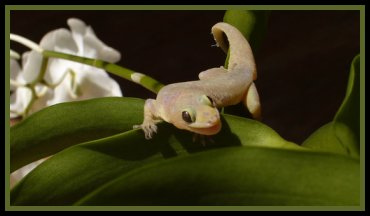
this cutie was taken by Crazyegg95 in 2005 and is from flickr

lizardrinking
for the main blog of poetry, whimsy and maybe beauty, now http://theheartbeatsoftly.wordpress.com/


Saturday, 7 November 2009

on the 20th anniversary of the fall of the Berlin wall

Palestinians, Israeli and international protesters toppeled one segment of the concrete wall, during a demonstration against the barrier in the West Bank village of Nilin, near Ramallah, Friday, Nov. 6, 2009.
The protest in Nilin was held to mark the 20th anniversary to the fall of the Berlin wall, which has been declared an international day of action against Israel's barrier.
The 300 demonstrators managed to topple a part of the eight meters tall concrete wall that cuts through the village's land. The concrete wall in Ni'ilin - five to eight meters (15 to 25 feet) in hight – has only recently been laid on the path of the wall cutting through Ni'ilin's lands, in addition to the already existing electronic barrier and razor-wire.


Photo by: Keren Manor/ Activestills.org
Photo by: Shachaf Polakow/ Activestills.org

Tuesday, 3 November 2009

tomatoes


Israeli army destroy a Palestinian field, Hebron, Palestine, 29/10/2009.
Atta Jaber shows tomatoes from his field after Israeli army contractors destroyed it and removed the irrigation system near the Jewish settlement of Kiryat Arba, near Hebron, on October 29, 2009.

The Israeli army claims the field poses a security threat because it is too close to the settlement.
Photo by: Oren Ziv/ Activestills.org

Friday, 2 October 2009

Echigo Tsumari Art Triennial - Autumn 2009

Reverse City, Pascal Marthine Tayou

***Update, 6 October. The Echigo Tsumari Art Triennial site has the Autumn programme up in English now. However, I think the finish times for the tour are incorrect on some pages, though not the one I linked to - so you should double-check if you are taking them (it finishes at about 16.15), and it does not have any details of the special train from Niigata or the service bus from Nagaoka (links are in this post). Still, it does have lists of which artworks are open and a lot of other information.***

Okay, the Autumn launch of the Echigo Tsumari Art Triennial for 2009 begins this Saturday the 3rd of October. I'm not seeing much around in English for it, so for those who are curious, I will post what I know. I can't really read too much Japanese, but I have been in touch with the wonderful people who run the Art triennial, some of who have a pretty good working knowledge of English, and so I will put up the Japanese links, and repeat what I was told as accurately as possible, and if you can read Japanese, all the better for you.

Culture Bound Syndrome, Ryoichi Yamazaki

The Autumn part of the festival is running from October 3 to November 23rd. Particularly later on, this should be a beautiful time to visit the Echigo area with all the leaves in the mountains changing colour. Rather than tours running through the week as there were during summer, the tours are limited to Saturday and Sunday. One tour on Saturday and one tour on Sunday. Here is a link to the Japanese site which details that.

The Sunday course includes
*234/The Last Class
*232/"House Memory"
*214/215 "Croquette House" "Shedding House"
*200/Claude Lévèque "In silence or in noises"
all of which I'm very keen to see.

The departure and arrival times are as follows:

Departure :10:15 Tokamachi Station
Arrival: 16:15 Tokamachi Station
Price: JPY5800.-/person

The Saturday course includes Ubusuna House, Antony Gormley and Potemkin among other artworks (that's about all I can read). This website details the artworks, and this article from the Guardian sums up the triennial very well.

Tsumari in Bloom, Yayoi Kusama

There is also pick-up from Echigo Yuzawa Station, and from Nagaoka Station. Details about the Echigo Yuzawa pick-up are on that link posted above. I think it picks up at the Echigo Yuzawa station at 9.15 for a 10.15 start in Tokamachi, and it drops off at Echigo Yuzawa at 17.20 having left Tokamachi at 16.15.

The tours are really pretty good value considering how winding the roads are around the Tokamachi and Tsunan areas and considering I would probably spend more time lost than looking at art. Additionally, the artworks are spread through 760km of countryside, which is quite some countryside. The tours are all in Japanese, but the art speaks for itself. The cost is 5800¥ though you still need to buy your passport if you don't have one (was ¥3500, but the price might have gone down, but I might be wrong on that). The company is called Satoyama Tours, and their number is
0120-865-615. All of the guides are volunteers, quite a lot are local, and they all love art.

The Visitors, Stasys and Kolodziejski /Witaszewski (A+D)

If you are coming from Niigata there is a special train running on the weekend to Tokamachi and back. I can't tell you how fantastic it is to know that. I don't know if it was running in the summer, but I spent a very long time in Tokamachi waiting for the local train to take me to Nagaoka and then to Niigata. Of course there is always the shinkansen or the limited express, but the cost adds up and you still have to get to a station which the faster trains frequent. So, here is the link for the trains, and I will paste the times below as well. The train times on that pdf are the ones in blue.

That pdf also includes an art bus, which I think is free, which leaves from Nagaoka at 7am and gets to Tokamachi (from where the tours depart) at 10. That is a very long three hour drive, but it goes through many of the local areas, so if you wanted to get a feel for the place, you could. If the leaves are already changing, it could be very beautiful. It leaves Tokamachi at 16.20 and gets to Nagaoka at 19.20. If you are going to take the bus, it picks up at the East exit, just opposite Hotel New Otani.

Train timetable from Niigata to Tokamachi and return

Not a terribly clear timetable, is it? Well, if you click on it it will enlarge and is clear, or refer to the original pdf above. The train leaves Niigata at 7.30 and arrives in Tokamachi at 9.52, and the return train leaves Tokamachi at 16.41 and arrives in Niigata at 19.04. Considering my last trip, before I used the courtesy bus provided to Nagaoka (which only took an hour that time - no meandering), had me in Nagaoka at 20.05 and home by about 22.30 after catching a 6.15 train that morning, you can't (or maybe can) imagine how happy I am that this train has been provided.

According to Hyperdia the trains are local, which is good news for price, because they are actually operating as limited express trains. The Echigo staff told me that the ticket price was ¥2180 one way, but Hyperdia says it is ¥2380 (I think this is the price for a reserved seat). However, I got myself an Echigo Two Day Pass which can be used on local trains, and apparently limited express rapid express, as well, as far as Tokamachi. It only costs ¥2500 and covers from Shibata (and a little beyond, but I can't read the kanji) to Tokamachi and again, a little beyond, so it would be well-worth the purchase for anyone leaving from the Niigata city area. I think it has to be purchased before the weekend, though, and you need to specify the dates you will be using it. But, especially if you wanted to explore the area on a non-tour day, it is get on the train get off within the area, you can save quite a bit of money.

Hachi and Seizo Tashima Museum of Picture Book Art, Seizo Tashima

I can only find Japanese information on the two day pass (there is also an Echigo one day pass for ¥1800, but it doesn't extend as far as Tokamachi). But if you print this off your travel agent will know what you are talking about and if you have a friend who can read it, that will help, too. Of course, you might be able to read it, or like me, pick up bits here and there.

Also some information about shuttle buses available in the area during the triennial, but I am not sure if this information includes the Autumn part of the festival.

Fukutake House, 2009

Lastly, if you have the time, the staff are very friendly and are willing to make tour bookings for you and to provide information for you if you email them. The email contact is on all of those links, I think, but just to save you some clicking time: info@tsumari-artfield.com. Or: 025-595-6688 (10:00~17:00)There is generally an English speaker on staff.

Friday, 18 September 2009

you are not allowed

Anyone who reads this blog semi-regularly or knows about the issues in Israel-Palestine will know that anyone who has been out of Palestine for six years will not be allowed back in by Israeli authorities. As far as I am aware, though of course those who colonised both Australia and the United States committed acts of genocide and murder, I do not think that any of the indigenous population were not allowed to re-enter the country of their birth and the country of their ancestors' birth, generation after generation, if they chose to leave it for a while. That is the overall country from the western perspective, of course. I am sure that there are Aboriginal and American Indian nations and lands within what became Australia and the United States that the indigenous population were barred and evicted from.

Education is difficult to get in a land under occupation, though Palestinians do strive to educate their children. Even so, to get ahead many leave the area to study overseas. Doing a bachelor of arts, a master of arts and a doctorate all take time. I have written of my friend Toufiq, before, a lecturer with a PhD in linguistics, currently in Oman, fortunate enough to have a Jordanian passport, and soon to immigrate to Canada where, he will at least, have a country.

Considering the state of Israel came into being in the forties of the last century and anyone who wishes to live there, who is of the Jewish faith, or of Jewish ancestry, and their spouses, whether they are from Sydney, the Bronx, or Moscow, can do so, must invoke a particularly bitter chagrin in those denied entry into their land of birth, and not only the land of their birth but the birthplace of their parents and grandparents stretching back to as far as people have lived in the area, or near enough.

During the summer holidays, Toufiq and his family go to Jordan. His sisters come from Palestine, when they can, and another brother, Bassam, comes from the United Arab Emirates. Sometimes the brother working in Saudi Arabia comes as well. Considering that this might be Toufiq's last summer in the region for a while, maybe it was with certain sadness that he realised that his sisters wouldn't be visiting Jordan this time. In his words:
Many times I talked to all my brothers and sisters in Palestine over the phone and asked them to come to Jordan to see us but they said that every year they come to Jordan in the hope to attend Bassam's wedding but nothing happens. So they said if Bassam gets married , they will come to Jordan and if not, they won't.
He comes from a big family. Ten brothers and sisters and Bassam is the only unmarried one among them. He too is highly educated with a doctorate in linguistics.

So, this time around, Toufiq thought he might try and visit Palestine, though in a previous email he had told me he probably would not be able to gain entry. I wrote about it here. This is his account of his thwarted trip.
As you know the last time I left Palestine was in 1984 when I finished my high school and went to Manila to do my bachelor's degree. In the first week of this month (August) I went to the borders of Israel and an Israeli female security soldier returned me [sic] and told me that I am not allowed to enter Palestine and I [got upset] and told her that I am Toufiq from Palestine and I was born and grew up in Palestine she said You are not allowed and she took my passport and gave it to a bus driver and told him to take me to [the]Jordan border.
Yes, Australia exiled Aboriginal people to islands and took children and isolated groups of people. Did it bar them from re-entering the country if they had voluntarily left and now wanted to return? I don't think so. In other ways yes. We had systems similar to the apartheid that exists within the occupied territories. Aboriginal people used to need a licence to travel, to work, and had a curfew imposed. Some of our current policies are incredibly discriminatory. Again, I would not call the policies and times ideal, then and now. I don't agree with them, in the same way that I do not agree with the policies above, in accordance with my belief in the contents and intentions of the Declaration of Human Rights, and the purpose behind the United Nations. And I am constantly saddened that my government fully supports the government that imposes policies which match and currently go beyond its own history of indigenous abuse and apartheid, and fully supports the same government which constantly flaunts and ignores the edicts and writings of international law and human rights organisations.

Thursday, 17 September 2009

Day 11, Towadako-Towadaminami-Odata-Akita-Sakata-Murakami-Shibata

From the bus window (hence the green hue), Lake Towada

Magpies and sunlight and glints in the wind. Day Eleven was a long and sometimes pretty, but fairly tedious trip home. It started at 8.30am and finished at about 10pm, if not later. Not because of distance, but the 2.5 stopover in Towadaminami (South Minami), the hour (or was it 1.5?) stop in Odate, the hour in Akita and the hour in Sakata. If I could have caught an earlier train I would have, but it didn't look as if Towadaminami had any hotels to speak of, and I would have got there on the last bus the day previously (about four o'clock) and missed out on the festival. So, it is just one of those prices you pay when using public transport.


The train ride from Towadaminami to Odate runs only in the warmer parts of the year (snow makes it either uneconomical or impossible later). The train guide book I was kind of referring to (mostly talked about shinkansen and limited express, so I used it only as a vague kind of route reference, and for some of the information it had aside from trains) highly recommended this trip. It was half an hour or so, and from a scenery point of view, not bad, but I don't know if it was worth the wait. The bus trip, though, from Towadako to Towadaminami was, climbing the hills and affording a view of the lake from the Akita side of things.

Small shrine with gardens where I whiled away at least an hour in Towadaminami while waiting for my 12.30-ish train


Between Odate and Akita

Additionally, I saw a beautiful sunset as the train followed the coastline into Sakata. I guess I wouldn't have seen that at any other time of day. But if you can get the first train of the day, it nearly always pays to do so.

On the way to Sakata, following the coast

Lost in Sakata

Wednesday, 16 September 2009

Day 10, Oirase Stream, Yasumi-Ya, Kunikazai Festival

The walk along the Oirase Stream starts at Nenokuchi closest to Towadako, or starts from Yakeyama at the other end. The most popular walk is an 8.9 km walk (I think) from Ishikedo (Ishigedo)to Nenokuchi. The walk from or to Yakeyama is about 14km.

Looking at the bus timetable, from the Minshuku to the start of the walk was about ten to fifteen minutes. This translates into a conservative hour walk. The bus wasn't going to arrive until about 8, so I set off at about quarter to seven. The beautiful flowers above were wet from last night's rain, and soaking up the morning sun

This sign was on my walk and the road leads to Shingo in Aomori prefecture. Japan's Christians were martyred in the 1700s, I think, possibly earlier, in quite a horrific way. Still, some have always existed since those times, and maybe before. However, the tomb of Christ came about in 1933
when discovery of supposed "ancient Hebrew documents detailing Jesus' life and death in Japan" [5] that was supposedly the testament of Jesus. These documents were allegedly seized by the Japanese authorities and taken to Tokyo shortly before World War II and have not been seen since.
Further from the Wikipedia article:
The town claims to be the last resting-place of Jesus, buried in the "Tomb of Jesus." According to the local lore, Jesus traveled to Japan at the age of 21, where he studied theology for 12 years, after which he returned to Judea at the age of 34.[1] He did not die on the cross at Golgotha. Instead his brother, Isukiri,[2] took his place on the cross, while Jesus fled across Siberia, Alaska, and finally to Aomori, Shingo, Japan, where he became a rice farmer, married, and raised a family.
On reflection, the story is no more bizarre than that of the Mormons, or if we really look back at the more established sects of religion, no stranger than any of their founding stories. There was, as far as I was aware, no bus to this area, or if there was, I just don't think I had the time. I have been fascinated by it for a while, though.


I woke early enough to break the morning's cobwebs, but not early enough to avoid the tour buses, except at this very early stage of walking alongside the road (cars zooming past when they were about) circling the lake. It was before eight, before the first ferries ran, and the minshuku was located in an area where most people would drive, not walk, to the next tourist spot. So, I was able to get pristine shots such as above. The morning was beautiful. It was about a 2 kilometre walk, maybe a little more, to Nenokuchi. My 14 km walk around Lake Onuma told me that the whole walk would take me about 4 hours, maybe a little more, maybe a little less, depending on rests, and inclines, and my own speed, which is generally pretty fast


After taking some pictures from the jetty at Nenokuchi, I started the walk. The stream was very pretty. I have just read that the 'se' of Oirase means rapids. I'm guessing the 'oi' means a lot of, and there were. I really enjoy gentle walks along peaceful, grassy, waterways. I guess most people do. It seems I can just keep going, so long as there are not monster hills, and even then, I usually do okay. I am glad I was early, though, even though I did run into those tour groups. I reached my destination at about 12.30 and caught a 13.18 bus back to Nenokuchi. From the heights of the bus I could see that the path had become crowded, and as I approached Ishigedo, the place where most people start the work, there were more and more people as the day wore on.


I have written about this before, the things that people lose along paths that Japanese put to one side in a fairly obvious and safe place, in case that person comes back to look for it. Small things. I guess that wallets and so on get handed in to the rightful authorities or possibly kept. That make-up bag, though, looks as if it has been tied to the railway tracks. Haaalp! Haaalp! the bark is encroaching!

The paths were a little wet from the rains. It was another reason why I was pleased that I had set out early. They were going to be slush later in the day.


A gorgeous walk with waterfalls all the way along which the tour buses stopped at with predictable regularity. The JR bus had a loop recording, and the driver pulled over at each spot for people to try and grab a glimpse at the very creatively named falls. This one is Kumoi Waterfall, but the guide books just tell me that it is magnificent, not the background of its name.


Kumoi waterfall.


There is a stone slab approaching Ishigedo from the Nenokuchi side which leans over a giant Japanese Judas tree. Ishi means stone, and Kedo, or gedo, means hut. A woman thief, named Omatsu is said to hide in the hut, so, once you've passed that obstacle, the rest of the walk is pretty much without obstacle.


I got to Ishigedo and had a bit of a rest, a soft drink, something to eat (or did I?); avoided or went with the many tourists, including quite a lot of foreigners, thereby proving this site's claim that the area is bustling with foreign visitors. They're the obvious foreign tourists. I am sure that there were a lot who slipped beneath my fellow foreigner radar.

The last third of the walk to Yakeyama is a lot quieter. That's when I started whistling to scare off the bears. There are signs all along the stream indicating flora and fauna and the way the surroundings change in the different seasons. I think the mushrooms above were some form of shiitake, but really, my ability to read Japanese is next to zero.


Walking a lot is tiring, but I think I could cover a kilometre in about twenty minutes. I can swim a kilometre in 25-27, so it seems about right, maybe a little faster, a little slower. Even so, seeing this sign made my heart sing!

It didn't take me long to get to Yakeyama which was an anti-climax after the beauty of Lake Towada and the actual Oirase Stream. There is a youth hostel in town, though, which is good to know if I ever plan any future trips, and my legs were too tired to really explore further. It was pretty warm, pretty humid, still.

I did pass the Oirase Brewery and considered going in, but it was a warm afternoon and would not have been wise. I tried their pilsner later, but it didn't taste any different from the usual Kirin, Sapporo, Asahi lager and so on. I would have liked to have popped into the brewery and seen what else was on tap.

I tried an apple ice cream, or soft serve, which was quite nice. The woman accidentally dropped my first one. I'm so glad that everyone else was being clumsy, rather than me, considering that it's usually my stock in trade (the four falls on Mt. Asahidake aside).

My bus came in forty-five minutes, so I sought out a cafeteria below the gift shop, but I can't remember what I ordered. Something with noodles. It was good value. Again, below ¥1000. The soba in this area is green, flavoured with ocha, or green tea.

The bus took us back through the whole area I had just walked. Nice to travel like this on the way back. Very peopled, now, too, so I felt all smug and self-righteous, or at least thankful and grateful that I'd enjoyed my walk in relative peace and quiet.


The day was hardly over, though. I took a boat from Nenokuchi across to Yasumiya. It was a fifty minute cruise. The pictures were pretty, but similar to the one at the start of this entry, or throughout this one, so I won't post more. They are up on flickr.

Once in Yasumiya, I had an hour and a half before catching the last bus back to my minshuku at 16.30. I could have caught two earlier, ones, but that would have only given me half an hour or so in Yasumiya. The lake, as in Onuma, has paddle boats, both swans and dinosaurs, and statue of two maidens reaching out to one another which is pretty famous. The sculptor is Kotaro Takamura, and the model is said to be his wife who suffered from schizophrenia and died young. It went on display in 1953.

Wandering along this sandy section of Towadako is pleasant. There are couples rowing, grandmothers entertaining grandkids, foreigners with families and pushers (don't I sound like the redneck?), stalls selling konyaku (yam paste jelly kind of thing, one of my favourites) seafood, hot potato (chips), corn and apples. I bought an apple because my fruit intake had been appalling, but Japanese apples, on the whole, apart from being incredibly expensive, are too floury for me. Still, it did the trick.

I hadn't know that this festival was going to happen. The Kunikazai festival is one of the last big festivals of the season. The best of Aomori, Akita and Iwate prefectures (ken) come to Lake Towada. Lake Towada also has its own festivals, including a horse dance (people pretending to be horses) that I really wanted to see, and I did.

It was early hours as these dancers came through, but they were colourful, and skillful. I really like Japanese folk songs accompanied by the very high-pitched shinobue flute.


There was a lot to see, and I was a bit sad to go back to the minshuku, even though I'd be returning to the festival later. Still, I need a bath. The other four people were from Sendai, and they had come over especially for the festival. 2 middle-aged, or leaning towards elderly, couples. They loved their festivals. The Japanese really do. I guess they understand the skills in them more, and that they also have participated in them ever since they were children. With some, such as the awa(o)dori dances, it is relatively easy to participate.


My camera (phone camera) doesn't work well at the night, so I didn't take too many pictures, but this Nebuto float from Aomori is famous. There are hundreds of them when the festival is held in Aomori. There was this big one, and a few of the smaller fan shaped ones here.

The Kanto festival from Akita Ken involves balancing huge top heavy lanterns in ridiculous spots on the dancer's back, chin, palm of their hand and so on. It was exciting to watch.

I really enjoyed a dance involving older men and younger boys, girls too, which was obviously telling some kind of fishing story. It involved taiko drumming, too. Very funny, very skillful. However, the man from the minshuku had said he'd pick us up at 9.20 and I was tired, so I found him at 9.00. I didn't mind, but the grand finale probably kicked on until about 9.45 which was when the others joined us. I should have waited and seen. All of my reading was retrospective, and then it became far more interesting.

Still, I love seeing the people at festival time. As it is a holiday town, many of the men and women are out in the yukata that their minshuku, hotels and ryokan have provided. Little kids play games, eat ice cream, fan themselves with uchiwa fans. It was a really big deal, too, as seen by the big mix of people. The following day the bus passed the campsite and I noticed quickly with fellow foreigner tracking eyes, the large number who were hanging about. They were probably locals, and living in Japan.
Day 11 was the return journey. A trip from the minshuku to town to catch the 8.30 bus down to South Towada Station (Towadaminami eki) where I had to wait until 12.30 for my connection

Tuesday, 15 September 2009

Day 9, Onuma - Towadako

About six a.m., September fourth. The entrance to the train station from the youth hostel side. Just as well the sign is large and easy to spot, right? Lucky I knew where I was going.


Being artsy at 6.05 at the Ikedaen Station, waiting for my train to Hakodate, and then from Hakodate to Kikonai, Kikonai to Kanita (Honshu) and Kanita to Aomori


Robot arms. 6.10 at the Ikedaen Train Station

6.15 a.m.! Two carriages, too, for the early morning students and workers.


Some time after 7.10 a.m., a station a few stops after we had left Hakodate


Way down south. I guess we were nearing Kikonai, the station where those with seishun juhachi kippu had to get a limited express to be able to get to Honshu (no local trains available).


A poster at the Kikonai train station. We arrived here before nine. I remember, because I used the bank ATM once 9 hit (no, Japan does not have 24 hour ATMs). Misogi festivals are basically where guys strip down to fundoshi (loin cloths) and purify themselves by plunging into water in the midst of winter. The Kikonai version, dating from the 1800s, seems particularly severe.

Kikonai station

Torii over the ocean. A few people were reading a sign to the right, but I can't read kanji. A Dutch ship sank here, again in the 1800s, 1857 . Maybe it somehow reflects that.

On this ticket I found it a great idea to get out and stretch when you could, considering how long you spent on the train, or actually waiting, therefore, coin lockers were a blessing, though, in these towns, the Japanese staff of the shops in the stations and so on didn't mind you leaving your bags nearby and they'd keep an eye on them. Usually there was something to see. Like this statue of this boy, though what story it represents, I do not know.

The train arrived at 9.31. We'd been waiting since 8.00 or 8.30. Two trains left at 9.31, which is highly unusual at the smaller Japanese train stations, or any of them, actually. So, my fallback of double checking the time to make sure I was on the right train almost had me foiled. There are only five limited expresses a day from Hokkaido to Honshu, so I really didn't want to miss this one. It goes through the tunnel, pretty long, pretty deep, and there is a station at the deepest point of the tunnel. If you book ahead, you can get out and have a tour, but that would mean waiting a couple of hours for the next train. I don't think I could do it. Imagine all that ocean overhead. Still, I had saved my obento (packed lunch) for this part of the journey, so that my 50 minutes of luxury could be enjoyed to the full

We arrived in Kanita at about 10.30 and were shipping out at 11.30 or thereabouts. I'd already explored the shrine opposite the ferry port on my way to Hokkaido, and it was a little far and a little humid to do it again, and so that left me plenty of time to look at the lovely displays in the JR station. Oh, by the time we got to Kanita, on Honshu, toilet paper once more seemed to be a feature of the public toilets.
Every JR station seems to have small displays, created by the staff, I suppose, illustrating the highlights of the area. To be less than accurate, I am not sure if this small display, obviously promoting the benefits of drinking sake in outside onsens, was actually in Kanita or Kikonai

Another poster. Click on it to enlarge. This one is urging commuters to mind their manners, which is fair enough. It is interesting that it is in English. We foreigners are notoriously bad at not adhering to social customs and mores. Rest assured, there were Japanese versions around the place, too

Well, after I'd eaten too much, and done some yoga exercises and stretches which did a little to alleviate the aches and pains brought about from too much sitting and too much lugging around of baggage, the train pulled in and we could sit on it , waiting until it pulled out again (with us on board!, just in case that sentence confused you). This local was going straight to Aomori. It would still take an hour, I think, or maybe a little less. Many more carriages than the local trains up in Hokkaido and further north in Tohoku. You could feel that you were drawing closer to a city centre.

Someone famous came in off one of the other trains. The ladies in my photo were waiting for him. A big guy. I think I'd seen him on the television. I wasn't sure if he was Japanese or not. I'd definitely seen the interviewer. We were told not to take photos. They, camera crew, talent, back up, all went into the small waiting room to film, I guess. The ladies were definitely giddy and fascinated


My second view of this Aomori bridge, or my second time to come into the city, walk along the path towards the turnstile in the train station, to look out the window, and see its elegant arches sweeping the edge of the city

The bus to Towadako, or Lake Towada, left at 1.30, or a little past. Maybe 1.40. I bought my ticket, and again, had an hour to kill. This lunch was delicious. Hotate, or scallops, were in that big omelette-like thing on that huge shell, and the miso soup was full of asari, (clam). I think it was a speciality of the restaurant. Again, relatively cheap, below ¥1000. I went to get an ice-cream (Baskin and Robbins) but the place was under-staffed, and the one girl too busy to serve me. The bus ride to Towadako was going to take three hours, which always seems ridiculous for 76kms, but then, I forget it is a windy road and a lot of it is urban at first, and that the speed limit is not the crazy 120km plus per hour that the Omanis drive.

It was quite a beautiful ride, for which I was pleased, as I had spent ¥3000 on the ticket. The seishun juhachi kippu does not cover bus rides. It went through the Oirase valley, passing waterfalls and the stream, along the way. Also, outside of Aomori, it passed hot springs and rope ways and had lovely views from the mountains and up to them. Of course, the first view of lake Towada is quite breath-taking, or pretty, at the least.

I'd booked my accommodation in Ikedaen by phone. I'm not great at Japanese on the phone. I can do the basics, but it's best if I know where I'm going to beforehand, or I have some kind of map so that I can listen and reinforce what is being said with a visual prop.

The woman had given me the name of the minshuku, and how much it would cost, but I had no clue where it was. I was hoping it was where the bus stopped at Yasumi-ya, though considering the price, I doubted it. The lake is 46km in circumference, though, and I didn't know how I would get there if it wasn't in this centre. The buses really didn't run that regularly.

I went to the visitors' centre (had half an hour to spare before they closed) and they directed me to a very nearby minshuku with a name very similar to my own. I was surprised because it was so close to the lake and the centre of town, how could it be so cheap? (¥3700). It wasn't the right minshuku. The guy looked up my name. Nothing. Then he put in a call to somewhere else and I was picked up. The minshuku in town is called kokuminshuku, the one I was going to is called kokuminshukusha. Koku is the kanji for country.

An older bloke picked me up in not the newest of vans. At first, I was really disappointed, thinking I'd be miles from everywhere. But then, I really wanted to walk the track along the Oirase stream, and this was much closer, and later I discovered that the bus actually stopped pretty nearby.

As I checked in, they assured me that they could drive me into the small town so that I could catch my bus out on Sunday (I was continuing south) and they also asked if I wanted to attend a big festival the following night with three other people. Sure, why not? (post, day 10, in the works).

Anyway, my answer as to the cheapness was because it wasn't the newest, as seen by the photo above. I actually got called up on this phone, and yes, it still works. But it was big (the minshuku). It was a faded glory. It had tennis courts, and a good view of the lake, a huge ofuro (bath). The rooms were large, too. I just guess that Yasumi-ya is the place where people want to stay, but perhaps, in the past, this place had been popular.

What the minshuku didn't have in newness, it did have in small touches. It had a male and female version of the yukata, and it had the heavier brunch coats that you need to wear once it gets a bit colder, and wear it I did.
The other way that they minshuku and so on make money, aside from providing accommodation, was obviously through breakfast and dinner. The breakfasts and dinners in minshuku or ryokan are nearly always worth it, but I could afford one ¥2000 dinner, but not two. The ¥2000 was relatively cheap for what I got, too, which was fabulous mountain vegetables, and delectable serves of fish and seafood. Really, I would have loved to have eaten it the next day, but I was being a little bit careful with money in some aspects.
Additionally, having the set meals means that you are limited to a time frame. If you are the only guest (as I was on Friday, or the only one eating, but I have the feeling that I was the only guest bouncing about that great huge building). I think dinner was served at 6.00, or maybe 6.30, but either way, I wouldn't have minded wandering around the bit of Towadako lake where the minshuku was situated for just a bit longer, but felt I had to return for dinner. Ryokan and minshuku are usually run by family, and you don't really want the whole family to wait around for your return.

Likewise, for breakfast, I often wanted to set out before the 7.30 serving time, and I don't get particularly hungry in the early mornings. And of course, an onigiri (riceball) was and is still cheaper than a set breakfast or dinner, but not as delicious.

Another touch that the minshuku had which hinted at former glory, was that the water in the ofuro came forth from a lion's head spout. Rrowrr. Never mind the falling apart, chipped tiles and so forth. It was clean, and once it had been grand. It also provided pumice stones for scraping your feet, in the same way that the Fuji business hotel in Asahikawa (the ¥3200 one, including breakfast) provided disposable razors. Small touches that were not a part of a youth hostel, and often not seen at all in the more modern business hotels.

Before dinner I wandered down to the lake (past the sign which said DO NOT ENTER! BEARS!)

I wandered past some houses, including one where some small kids were playing with a dog. A mother with them looked at me with some suspicion as I walked by. Though a website I have just found describes Towada as 'A city bustling with foreign visitors' (and I was surprised just how many there were for the festival the next day), I don't think that too many came to this neck of the woods. Perhaps.

Later, the small girl who had the dog came down to the waterfront as I was taking pictures. She had a chat to me and declared that my Japanese is very good, but my pronunciation and faking skills are actually pretty good. Still, we got by and she urged me to come to the festival the following night. Absolutely. Zehi! Everyone was looking forward to it.

I said that I would go, and moved on to admire the lake some more and snap a few more pictures.

Walking back I took note of all the bus-stops, including the one with the minshuku's name. I could have got off there and then when we had been heading to Yasumi-ya, but at least I had some knowledge of the layout of the main town, and where I stood in relation to both it and the beginning of the walk along Oirase Stream (smack bang in the middle, I'd say, though closer to the start of the walk, so, perhaps not). Then this cosmos waved at me from the road as I walked by. Things are a lot wilder in Northern Tohoku than in lots of other parts of Japan.

day 8, Onuma Koen and Hakodate

Life is verily and mostly and something unexplained. But anyway, on with the journey. Photos for the next few entries and I'll fill in the text later.


Early morning. I set out before 8, I think, and cycled to the park, walked over the bridges that joined the lakes and then continued 14km or so around the circumference of the lake, taking me past Shinrin Park, past the camping ground I hadn't managed to get to the day before, past the youth hostel, and eventually back into the town of Onuma Koen (well, that's what the station is called). Past the many signs directing you towards evacuation spots in case Mt. Onuma were ever to blow (as it had threatened to do in 2000, I think, coating the township with ash).


About 12.30, 1pm, coming into the town surrounding Onuma koen. I had a lavender ice cream which did taste of lavender and was yummy. Hokkaido is famous for its lavender fields.

So I'd been hanging out to go to one of Hokkaido's microbreweries ever since missing the opportunity in Asahikawa, and not having the time to stop in Otaru, so I was really please to find the Onuma Craft Brewery as the sign reads in English. They had three beers on tap but had won prizes for others. I skipped the lager, though I'm sure I would have enjoyed it (or pilsner, or lighter beer, you know... I'll look it all up later, promise) and had the slightly fruity but very smooth alt beer I think.

I ate snacks of dried squid and other seafood. I then had the 8% beer. As long as they are not too dark, I usually like these beers. They have a light touch of malt-ish flavour which disturbs my taste buds a little, until I get used to it, but it is not so strong that I cannot drink it, which is what happens with a stout. However, I know it's always a dangerous proposition. I don't know why, but 8% in a beer is too much for me, whereas 11% or 13% in a wine is not and nor is the 40% in a Pernod. It was going to be a woozy afternoon.


I asked the best place for ramen and was told on the corner, but it was the tail-end of the tourist season and they had finished lunch for the day. The brewery, too, had just me as their only patron. But there were tourists about. A huge group of Chinese tourists had hired all of the low slung tricycle kind of bikes available, which could all join up, and join up they did. They cycled past me, down the road, towards the park, high-fiving the rental guy as they passed him, fifty of them, all joined together. One of the more bizarre sights of my holiday.

I had intended to go to Hakodate to seek out the amazing ramen that I had had at the markets the morning of my trip up to Sapporo, and I wanted to check out the beer hall which also featured any number of local, smaller beers. So, considering I could not get local ramen, off I went. I asked the woman in the Onuma brewery what the local speciality was. She wasn't sure, but then she said Jingis Khan, or Genghis Khan, which is a lamb dish, borne in Hokkaido, served in a dish which resembles an upturned Mongolian hat. I'm not a big meat eater, so I passed it up.

Onuma Lake Station (Onumakoen station)


The lake from the train


It was easy to find the ramen shop, and though it was nearing two or three, they were still open, even though I know they would have been open very early that morning, too. I don't know what their hours of business were. It was just a walk-in off the street place, which also had a table and chairs on the sidewalk. It could fit about twenty at the most. If they were a husband and wife team, it was the husband who did the cooking. He was eating lunch, but he stopped to serve me same ramen dish that I had ordered before. Full of crab, prawns and scallops. Yum. When I wandered past later I saw some more foreigners in there. I was slightly disappointed as I thought I'd wandered across an authentic 'local' place, but that's not to say that they hadn't too. The ramen shop was and is in a tourist area, so really, who am I kidding? All below ¥1000 too. That is the good thing about tourist spots in Japan. You can still always find somewhere good and cheap and of value to eat. Usually.

The owners, or workers, remembered me. It was fun to have a little chat with them.


Snail thingy


Hakodate is famous for its seafood


Hakodate clams


Weighing up whether to come into town or not is a bit of a concern, as I was still taking local trains and there could be an hour and a half between them. Even the faster trains didn't necessarily stop at Onuma or Onuma Koen (where I had left my bike), and definitely not at Ikadaen (the station closest to the youth hostel). So, a trip into town had to have some kind of purpose. I was pleased to get the ramen as the next venture was to the beer hall where I was hoping to sample some more of the produce of the micro-breweries of the area.

It was getting cold, rainy and approaching the latter part of the day. Four-thirty or so. Anything I wanted to do I had to fill into the next half hour to hour. The train, of course, was not available until about half past five.


This was all that I got to see of the beer hall. My time for travel was perfect. It was just outside of the tourist season, so all the buses and so on that catered to tourists were still running, and the weather was still warm, and tourist traps were not tourist traps as they were not overrun with the tourists that made them so. The downside, of course, was that many of the tourist must-see places closed due to lack of interest, I guess. On a now become rainy, grey Hakodate afternoon at 4.30 the beer hall had given up the ghost. Closed.

Well, I took photos of the sign, as you can see, and the possible sacrilege of some very inventive shandies (on the menu); let's see - grapefruit beer, green apple beer, Cassis beer. Returning to the train station I took photos of the above seafood, and the profusion of flower baskets that adorned the light poles. They just wouldn't survive in Australia. Not just the heat, but vandals would attack them or steal them. I wonder why we don't have a sense of everything belonging to all. I guess it is being such a mix of different nationalities origin-wise, and the rugged individualism that is the spawn of capitalism.

I was full, still slightly tipsy, and kind of out of the hours for museums and such. I guess I could have gone shopping, and I did buy some Hokkaido chocolate, but mostly I found a room on the second floor of the train station, looked out across the railway tracks, went back to my seat, rested my head and had a little nap. Then wrote, then texted, then transferred pictures, then finally caught my train. The waiting, the waiting.


I had to return the bicycle by 6.30 and the train arrived at 6.10 to the weather seen above. Quite a contrast to the morning's weather. I also wanted to wash my clothes. I was travelling with two pairs of cotton trousers, three shirts, three pairs of socks, and enough undies. Great travel companions, let me tell ya. Washing needed to be done every day, if possible.

However, when I got back to the hostel the owner offered to take those of us who wished to a local onsen (hot spring). Cost, only ¥370, about $4.00. It was after dinner, and I could have put on a wash, but at the hostel you needed to ask the owners (who were busy with dinner) and it took a good ninety minutes to dry, and I know they'd be thinking 'She just did them yesterday', or at least that is what my 'fear of imposition self' told me.

The onsen was great, though, keeping with its low cost, shampoo and body wash was not provided. They usually are, and I had almost run out of my supply. Even so, after washing myself down with shampoo, hair and body, it was wonderful to relax in the creamy, buttery water. And for a good price. There are local onsen nearby, quite famous, but I think their cost is about ¥1500. Of course, they are all modern and shiny and new. Going to an onsen was the one thing I hadn't done on my Hokkaido trip, too, so it was a nice way to wind it up. There were huge paintings, not abstract but not in the school of realism, either. Pretty old. The girl behind the counter said that the artist was well-known in the area.

Heading towards the onsen the hostel owner had asked me if I'd seen any wildlife while I'd been out walking that day. There were lots of foxes, he said, in the forest and greenery that surrounded the lake. 'Ka', I said 'Plenty of ka. And a kaeru.' Mosquitoes. Man were they bountiful. You didn't want to stop for a moment - the dangers of standing still to take a photo. They actually prevented me from going further in the woods in Shinrin Park. The frog, I can't remember where I saw him, I just remember saying that.

Two guys also went to the onsen, one from east Hokkaido, where I had wanted to visit before I realised I just didn't have the time, and the other from Honshu. It was a full moon that night, having risen over the hostel just before our departure to the baths.
So, I left early again the next morning, my train coming through Ikadaen at 6.15 and taking me through, with the inevitable stops and waits along the way, to Aomori where I was going to catch a 13.40 bus to lake Towada, or Towada ko.

Monday, 14 September 2009

astride a hilarious aside

This bear sign is not in Hokkaido. In fact, if you can read the kanji, it is in Towada-shi, in Tohoku, on Honshu. But I'm sure it serves the purpose, and I did take the picture

I tried to tell Jake this fascinating, and it will have you in stitches, I guarantee, story as we were climbing Mount Asahidake, which will also have you in stitches, guaranteed.

However, due to the mountain's rather step incline and my inability to stop from slipping on rubble, despite the cloven hooved nature of my star sign (I have to check that, or take a survey - what do you think? Centaurs - cloven-hooved or not, or cloven-hoofed, of clofen-hooved, or you get the picture...), the story came out sounding like one of those lame stories that 40-something's tell very early 20 somethings (as in, was he even?) when they are trying amuse.

The 20 somethings, being brought up well, laugh or comment politely, and you swear, 'No, dammit, it's funny! If I wasn't struggling to tell you this story with an uneven pack on my back and a lifetime of fuss and rubble slipping under my feet, you'd see that! You'd get that! My timing would be perfect!'.

As it was, I'd broken one of the cardinal rules of going up very steep things. Do...not...talk. It makes no sense to talk. The deviants among you will know what I'm talking about when I mention my septum. It doesn't take me long to need to breathe long and laboriously through my mouth, a bit like the sound of Dennis Hopper and his ventilator in Blue Velvet.

I can climb steep things. I quite enjoy it, and I'm not too bad at it, but it usually sounds as if I am dying a whole lot sooner than other people when they are climbing steep things. I almost killed myself in a yoga lesson once when I tried to breathe consistently through my nose instead of my mouth. The teacher gave me this look that said, not for you, mouth breather, these exercises; not for the peace and tranquility invoked through steady nostril inhalation and exhalation. You'll have to reach that plateau by other means, get to the other side some other way. Life is tough for some, but even tougher for others, grasshopper. I was grateful for his wisdom.

So, before I left on my epic eleven day journey I had wandered into a sports store which is adjacent to the health club I attend. There I made two of the BEST PURCHASES EVER! One was a very large quick-drying towel from Adidas. I have the smaller version, and couldn't see the point. After swimming, the small version sops up the moisture quickly and efficiently but it's not satisfactory to just 'sop up'. You know, you want a towel you can 'wrap around', and maybe not snuggle into, but 'hide behind'. This towel was that and more. It was 'lightweight'. I don't know where this profusion of quotation marks has come from, but every time an adjective pops into my head so do they, indicating a heavily accented (in piano and pronunciation terms) piece of writing. In my mind, at least.

The lightweight aspect of the towel was brilliant though, in addition to being quick-drying and the size. Easily folded, dried quickly, not heavy, covered ALL the lumps and bumps. What more could you want? The other wonderful purchase was a thing that you click to another thing. You know, if you put this link on another link on your bag then you could link something else to it, like a water bottle in a holder that also had a link. Now, that would be a bit silly. Why not link the water bottle holder with a link to the pre-existing link? Good thinking. I fully concur.

Well, you can see that the link-thingy was a bit of a 'what if' purchase, not that I knew what that 'what if' was going to be, considering that my backpack already had a link, as did my water-bottle holder. 'What if' happened 2 days into the journey though, which is not far into it at all. I travel with a very small backpack, a daypack I guess. But I also bring my monstrous handbag because you like some things to be handy. Unfortunately it also means that it gets heavy because you just shove everything, like books, into it. I always end up with a third bag, too, for some reason, like I'm never truly comfortable unless I resemble a shuffly old bag lady who's looking for her slippers even though they're not so firmly slopping on and off her feet. It requires three bags, preferably plastic, at all times, to do this.

So, there I was in Wakinosawa, having just got instructions from the bus driver on the way to the youth hostel, crossing the bridge over a very green body of water, looking out at the sea, marvelling at the sheer beauty of it all and my grand, bold adventurousness, when snap! The damn, fucking handle of the big, monstrous handbag broke. Fuck, fuck, fuck, fuck, fuck, fuck, fuck is what I think I said. Probably quite loudly.

But there dangling off my backpack was the rainbow-petrol-coloured link(anyone who played classical guitar and had to use a foot stand [?] which was petrol coloured underneath, the steel that is, will know what I'm talking about), which was linking another link to another link. Well, it wasn't so much the missing link as the unnecessary one, but in another context, how necessary it could be! I linked that link through the zipper of my handbag because the leather had totally worn through on the bag, but not the huge round link of the handle/strap. Phew, if I had a few more technical terms, I'm sure you'd understand what I'm on about. I'll put a photo up tomorrow.

Now, the bag has two zippers, too, they meet in the middle, or ideally they do, before you start to tell me that my invention was and is highly impractical (if you can understand it). It worked! I was on the road again! I just had to remember to use only one of the zips, and to not overload my gorgeous retro monster handbag so much. From then on in it carried clothes clothes and only clothes, and the occasional guide book. and Gabriel Garcia Marquez (well, he'd always wanted to see Japan from a handbag's perspective).

So, you can imagine the mirth and hilarity that was potentially available in that story for Jake to dwell upon. Except, no, really, what do you take me for? I might torture my few blog readers with such tedium, but Jake just wasn't ready for it. I mean, as stated above, he might not even have hit the second (third?) decade yet and he came from the big island in Hawai'i. Such minutiae was of no interest to him. The best was yet to come.

Back in my hometown, six days before I was climbing the mountain with Jake, or maybe even a few days before that, I wandered down an aisle in the sports store that is adjacent to my health club and I saw a lot of bells. As said. But we're into refrains around here. Reiteration. Rhythm and repetition. Quite big bells, but not huge bells, kind of like miniature cow bells. They were in the walking section and they looked cute and I like cow bells quite a lot, especially in music, so I did consider buying one.

At the same time I shook my head with a fuzzy headed kind of bewilderment (my fellow shoppers thought I was trying to get pool water out of my ear) thinking how if there was a space where silence gathered then the Japanese had to fill it with noise. If you ever come here, you will probably understand what I mean. Tour buses don't just let you sit back in your seat to enjoy the scenery - every thing needs to be pointed out and then small anecdotes about the guide and the driver and so on have to be discussed, dissected and explored, and before you know it, eight hours of incessant chatter has passed. Probably this happens on English speaking tours, too, but then, I understand those.

At temples the pilgrims usually have some form of bell or jingly tinkily thing, and mobile phone gee-gaws usually make noise, as do advertisers and politicians and right-winged groups and born-again Christians touring the cities in cars decked out with speakers that would have Spinal Tap green with envy. So, I thought to myself, why do the Japanese always announce themselves? Wouldn't there be certain situations where that would be dangerous? Such as if a serial killer were lying (Lord help me with that word! The little blue book of grammar says lying is correct) in wait for prey along a lonesome, isolated hiking path (having spotted his prey, or rather heard them, from a long way off).

Anyway, I put the thought well out of my mind and the bells too. Then I set off on my adventure. Reading up on Asahidake as it came closer to the time to reach both the town of Asahikawa and the mountain itself, one phrase, which I had blithely skipped over before, resonated. "The visitors' centre can provide you with all your needs including bells to scare off the bears". Bears. Things with claws and snarly, grnarly, growly teeth and the ability to rip you into shreds and then toss your arm about in its mouth as if it were a triumphantly caught trout now having the very life beaten out of it. Of course my arm would be lifeless, but no doubt my limbless shoulder would be spouting a veritable fountain of blood, like some bit (hardy-har-har) player in South Park.

Bears.

Kangaroos are another story. Yes, yes, I know they can be dangerous and really, I wouldn't be approaching one of those Old Man kangaroos - the red ones can get to a decent size, but usually the ones I see are the grey variety and they just bound away. That's if you see them. You'd have to be pretty damn close for one to be aggressive. Or, it might be disorientated by disease, as quite a few have been over the years.


I didn't take this picture


nor this one (surprised?)


Bears. What the fuck did I know about bears or any other ferocious animal? That's what those bells were for. Jake wasn't much help. He was from Hawai'i. The guy at the entrance of the cable car, once we'd reached the halfway point, gave a helpful explanation of the area, all in Japanese, pointing out the tracks you could likely get lost on, and the track where a bear was likely lurking.

Every year a bear chases a Japanese somewhere. I'm not sure if they actually get attacked and die, though, but you know, the possibility is there. This has been a summer of animals, actually. I think I've seen four snakes locally, after not having seen any for the four years that I have been here this time around, though apparently they are not poisonous, but the Japanese show a healthy fascination/nervousness around them, so I'm not sure. So, if the snakes were showing themselves, then surely the bears were going to too. Especially to non-bell wearing foreigners.

Once the group had left I asked the guy a few questions, and we got a mix of Japanese and English, which was fine. Hiking season coincides with mating season, so the bears really do not want to be bothered, but they are more likely to be bothered by bell-less hikers. The advice given in the "You are in Bear Country" pamphlet is Bring Bear Bell! Make Noise! Bear spray may be effective (but not guaranteed). When you encounter a bear, Stay calm & Back away slowly. Never Run!! Then there was another pamphlet telling you to whistle or sing or talk loudly if you didn't have a bell, and that bears were likely to be near streams (not on the top of the mountain) and what to do if one actually did attack you, was on top of you (going beyond the play dead stage). Fight back, I think, was the advice at this point.

That's what those cow bells were for in that aisle in the sports store I repeat to myself now, and then as I tried to get the idea across to Jake. Those wacky Japanese. Foolish me. Well, Jake hadn't quite got my humour yet, though he was humouring me, so I can see why he wasn't rolling down the mountain with laughter, that and the fact I never got to the punchline.

I have to tell you, though, that as I walked along the Oirase Stream in Oirase Gorge, Towada, wherever, in Tohoku, about five days after this adventure, that I whistled, and I whistled loudly, and consistently and tunelessly. I inhale when I whistle. That probably has something to do with my deviated septum, too. But anyway, it got so I couldn't stop, but not a bear did I see. Nor another person. I think they were all avoiding me. Oh, hear that? That's the mad whistler. And she's a foreigner. Best we just hide behind this tree until she's gone. Between her and the bears there just ain't no fun left in walking this trail no more. But that's another story for another post (creatively entitled, 'Day Ten').

The Japanese are more cautious about many things than most, though they seem to have got more relaxed over the years. Asahidake is a volcanic mountain. Sometimes you can't climb it. It is slippery. You can get lost. There are bears. So, even though I have this blind and gullible faith, the Australian sense of "she'll be right" which usually tides me over in situations in which others are perhaps a little more leery, a little more wary, it was with more than a touch of envy that I greeted my fellow hikers (those who weren't hiding behind trees)with their clinking-clanking cow bells (bear bells... miniature cow bells, remember) and their shiny walking poles which folded up neatly into their backpacks. Oh, those poles.

That is how Jake will remember me. The mouth breather. The lady who took two hours to come down a mountain it took her an hour to climb. The pole coveter. The teller of inane stories about bear bells. We made the summit before I even got to the bit about what a good purchase my large, lightweight towel was, and you know how it is, especially when you're sliding down steep declines of volcanic rubble, you just gotta let it go, baby, you just gotta go with the flow (and pretend that you have a choice in the matter!).

Day 7, Sapporo to Ikadaen (Onuma Koen, just out of Hakodate)

Well, you can see the time as well as I. I went to bed late-ish the night before, annoying the English girl who needed pitch dark to sleep. So do I, so I understand, though our behaviour no doubt was bemusing to the Japanese girl, who like most Japanese, probably gets by on four or five hours of sleep a night, making up for it with quick naps on train trips. I think trains were made for sleeping (and seeing scenery) and I always wonder at the popular western abhorrence to sleeping on them. Of course, in dangerous areas it is not wise. And I sleep with my mouth wide open, so it is not pretty, but it sure is handy to catch a few winks. Also, anything in motion that I happen to be in or on tends to send me to sleep. Seems I can sleep anywhere except for my actual bed.

I bundled everything into a locker, as per usual, and wandered down the main street of Sapporo (or one of them) intending to to see the main park, a narrow strip, which runs for a few blocks. I didn't make it that far, but was able to catch some of the older government buildings in the morning light,

and to grab a diet Pepsi from a Lawson's. Not just any Lawson's, but a Postal Lawson. To purchase anything you first have to dodge the bullets.

The train left at 6.24 and it hit Higashi Muroran Station at 9.04. There was an hour wait there. The guidebooks write it up as an industrial town with nothing much to see, but I decided to see a little of it anyway.

Stowing bags in coin locker and so on...I walked along the pretty empty streets (nothing much wakes up in Japan until about 10am, business-wise) and discovered a park down one of the side roads. Here, as when I lived in Shikoku, the older people were playing gateball. I hadn't seen that for a long time. Natsukashi, as they say here, or it evokes nostalgic feelings, takes me back and so on.

It was good to stretch my legs and the park was pretty big, though the locals weren't keen on returning the 'ohayo gozaimasu' (good morning). Perhaps because I'd been on the road for so long it already felt like 'konnichiwa' time and that was what I was erroneously using.

The station wasn't the most friendly around. Most modern Japanese toilets offer the choice of Japanese style or western style - the squat or the throne. If English is used, the toilet door usually announces 'Japanese style' or 'western style'. In Higashi Muroran Station you had the choice of Japanese or Foreign.


Now, except for old ladies who have trouble with balance and squatting, the Japanese toilets actually are a lot better for the body and I think they're one of the major reasons why older Japanese people seem to have a much better flexibility and physical assurance than their Australian counterparts, anyway. Not to say that the western toilet is not popular with them, or with me. I think it was occupied, though, so I used the 'Japanese' toilet. I hope it didn't mind a foreigner expelling things into it.

In addition, this station had warnings posted about the place strictly condemning sleeping in the overhead pass. Now, it was a transfer station, and people are likely to get stranded at one point or another, considering the trains all stop at one am or so (a lot earlier for the less frequented lines) so I guess there might be a lot of sleeping in overhead passes going on, or maybe the steel workers of the town had tried to sleep off a drunk there in the past.

One thing their toilets didn't have was toilet paper. This is a characteristic of Tokyo toilets, and from Hakodate northwards it seemed to be a characteristic of Hokkaido toilets, too. Now, Tokyo has the huge population. Hokkaido just might not get enough money fullstop, or maybe it was aspiring to Tokyo-like inconvenience stakes. I took to either using the toilets on the other side of the barrier, which always had paper, or the squat, steel toilets in the train, which were a lot cleaner than they used to be when Japan seemed to have a lot more beer swilling, chain smoking, business men travellers than now. Of course, they could have all been on the shinkansen or faster trains, and of course, smoking wasn't allowed on the trains any more. Some things do improve. You need not wonderful balance, but some balance to use them on the trains, though.

Higashi Muroran did have that cute ramen shop above, though, which had nothing to do with toilets. Ramen in Sapporo is something worth sampling. Not that I did at that time of the morning.

So, as the hour rolled along, 10.04 came about and once again I was on a train heading to Oshamambe. Once I hit Oshamambe, I'd be taking the same way back to Hakodate that I had taken from Hakodate to Sapporo (or to Oshamambe). I'm going to throw this picture of the coast in here now, because I think it was part of this journey (I could have even misfiled it, and it might be part of the Hakodate-Aomori journey, but, oh well! I could look it up, too, but again...). The train journey was really pretty - All the way from Shibata up to Sapporo. Of course with big chunks of urban and suburban sprawl, but it wasn't too long before you left that behind, and the scenery offered you a choice of ricefields, or ricefields and rivers, or ricefields and mountains, or ricefields and sea. Of course, there was also plain old sea, sea with sunset, or mountains with pines and mountains with rain forest. I haven't taken too many train journeys around the world, but I haven't been on one which follows the sea so closely. The train along the Matsushima line in Sendai has some points, too, where I wouldn't want to be stranded if a tsunami were to come in. Beautiful when the tsunami threat has abated, though. I present you with sea, grid, metal post and train station name.


The stop over in Oshamambe was an hour and a half. I'd wandered down to the sea the last time I'd stopped over, this time around I was trying to find a hat for a reasonable price. I'd picked up a hat I was quite fond of for 500¥ in Shibata and it had served me well, and was lightweight and kind of funky, but I'd misplaced it somewhere in between Asahikawa and Sapporo. I'm figure it's riding the trains still. Hatless when travelling in the still summer-like September is not a good idea, but all the hats I could find were close to ¥3000, and I wasn't going to spend a night's accommodation on one.

So, I discovered a supermarket and stocked up on tissues (probably a little too late. We were entering an area where there wasn't such a paucity of toilet paper, but still, a girl's gotta blow her nose every now and then) and wandered over the lines to check out the wild and viney forest that seemed to be just beyond the town. But, it was humid, I was hatless, and I didn't want to wander too far, so I turned back and then spent a pretty boring half an hour waiting for the train to come in.

Train lines into and out of Oshamambe

Well, my writing's pretty prosaic in these pieces, so I'm sure you know how I felt.

Shoes were off more often than on on the trains. Most of them were just one carriage, sometimes two. Often, even on the one man carriages, you managed to get a whole four seater to yourself. That is, your seat faced the other. They also had two seaters which were similar. On a normal train I avoided these seats as they involve knocking knees and too close a proximity to your three fellow passengers, however, if you're the only one in the seat, then rock on baby. Shoes off and feet up. Following local custom, this is okay, as long as your shoes are off and as long as you take your feet off the seat if someone else happens to share your haven with you, or you both kind of check if it is okay to be so relaxed.


Alcohol consumption on the longer train journeys in somewhat rural Japan is not really a problem either. It's all a bit of a holiday, a rest away from the ordinary, and I saw a man on a train at 9 or so in the morning the other day, enjoying his first beer. It has to be said that this would be looked down upon on a normal commuter train if it wasn't obvious that you were setting out on some kind of journey, and were relaxing in some kind of way. Even so, I avoided it, as it makes me too sleepy in the middle of the day.

As we approached Hakodate and Ikedaen (Ikada Park) where I was staying, things got closely mountainous again.


Onuma Koen, just outside of Hakodate, is a popular holiday spot. It borders three lakes, the largest of which is Lake Onuma, and I think the mountain overlooking it is Onuma San, though I'll look that up for you. Definitely do not quote me on it. The youth hostel I was staying at was about twenty minutes walk out of Onuma Koen and had a reputation for friendliness and for good dinners, which was not unwarranted.

I arrived there about three in the afternoon and was thankful to my guidebook for directions to the hostel as the station was unmanned and I doubt I would have understood any instructions given to me anyway. It wouldn't have been easy to find the place without instruction, and as it was, I misunderstood what was written, even though it was in English and I'd read it enough times to now know it by heart.


The couple who run the hostel really are lovely. I wanted to stay two days, but had to figure out my Lake Towada accommodation for day nine and day ten. Once done, and it took a while, I booked and paid for an extra night and then hired a bicycle (500¥ a day, I think) and went touring around the lake a little, which really was quite beautiful. I was washing clothes as well. The downside of travelling lightly - you need to wash your clothes regularly, and it's great in places like youth hostels and some minshuku which have amenities, but not all places have amenities, and some of the hostels have special rules so it seems a bit of a burden to ask to wash your clothes again. Consequently, I handwashed my clothes when I was in Towada-ko (and from Aomori) and wore them wet. Body heat dries things out quickly, and the lightweightness of them all (even when wet) meant that there really wasn't too much threat of rashes and chafing and so on. It's not ideal, though.

So, I initially went left from the hostel towards the main park area. I took photos of the lakes that afternoon, but have either put them in an incorrect folder or deleted them somehow, so I'll put a picture below from day 8. I like the picture, but the mountain does have a peak, which I saw, believe me!

Returning to the hostel to transfer my clothes to the dryer (takes 90 minutes to dry), I ran into a couple who were travelling around, both on the older side of things. He was pretty lively. Impish, leprechaunish... They were travelling around in car that he had converted so that it fit two beds and I am assuming a small kitchen, or maybe they just carried a small gas stove for cooking. Later I found that they were from Kumamoto in Kyushu and travelled a lot. He was on the eccentric side of things. She kept him in line, I think.

The hostel owners convinced me that my clothes were okay (I was afraid of impinging on someone else's time) and sent me off to see the sunset. It was some cycling away, considering I had to get the bike back by 6.30. They said that the best spot was the campsite and I probably made it to within five minutes (by bicycle) of the campsite. I still took in a beautiful sunset, even though I hadn't reached the desired destination, and cycled by some pretty spots. Everyone was setting up to take pictures of the sunset. It's quite funny, taking a holiday through the lens of a camera. Sometimes you (wrongly) think that something isn't worth seeing just because you can't get a 'capture' of it.


Dinner was lovely. A mixture of classic Japanese and western. Salmon was on the menu. Yum. There were only six staying at the hostel that night, including one guy who didn't have dinner. I had a two-bed room to myself. It overlooked fields behind the hostel, and I was able to see the rising moon which was kicking into fullness. There were mosquitoes galore in the area, but the flywire worked well enough in my room to keep the window open.

The other two people enjoying their dinner (other than me and the car converter and his wife) was an older lady and a younger woman. Later I found out that she was a tea ceremony teacher and the younger girl was her student. Very cool, very sharp, very kakkoii (the older woman). The older woman said she'd lived 24 of her years in other countries, and she was from Nara. She said that she hadn't learned any other languages though, so I wonder if she is and was a very famous tea ceremony teacher, or just very adventurous.

The girl wanted to speak English with me for a while as she missed her English lessons, which was kind of a drag, but also fine. We sat in the common room, which had a computer (so later I was able to figure out how I was going to return home more precisely)and chatted about her friends (she wasn't really interested in talking about current travel), eating a few of the snacks the owner brought in and drinking the soft drink she had purchased as a thank you.

Lights were out (my lights) by eleven or half eleven I think. The next day was the lake, and hopefully a chance to revisit Hakodate.

Saturday, 12 September 2009

Day 6, Asahikawa - Sapporo

As I stated in my post about day five (two removed from this one) I left Asahikawa a little too late to take full advantage of the seishun juhachi kippu. The ticket is great value. 5 days travel all over the country for the equivalent of about $130 AUD, $115 USD, and you do not have to use those days consecutively. To get your money's worth, though, each time you use it, or the combined usage of the days, should mean that you've used up more than ¥2000 worth of travel. Coming into Asahikawa, and also on the trip to Shimokita (day 2) I had not. Coming into Sapporo just tipped the balance, but not by much, so I intended to go out to Otaru and do a few quick trips here and there on JR to make sure I got my money's worth. Only thing was, I wanted to do lots of things in Sapporo too, and I had started late. Otaru had to go by the by.

Additionally, my return plans had changed a little. I wanted to stay in Lake Onuma just outside of Hakodate for two days, and two days at Lake Towada in Tohoku, Honshu, and I had to figure out accommodation and train schedules. So, from an 8 o'clock start, or thereabouts, the train pulled into Sapporo 11am or thereabouts (catching the six o'clock train would have seen me have the whole morning). So, off to the visitors' centre and then to the Internet to figure out times.

At the visitors' centre I got them to more precisely, please, show me where the ramen alley was, and they did. I wanted to hire a bike, too, which you can do from 6am until midnight for only 500¥. You need to pay 1000¥ deposit, but you get it back. It was close to one, I think, when I finally got moving, or maybe edging towards one.

Bags stowed in lockers, I set out in the heat to find the bicycle hire place. It wasn't too hard, but not too easy. I wonder what people who don't have the rudiments of Japanese do. Maybe pay more attention than me.

With trusty steed I found out the location of my youth hostel (it was too early to check in, and it is so close to the train station. The guide book gives it a bad write-up saying that it has very strict times and so on. But their policy must have changed. There was no curfew). Then I pedalled on down to the Botanic gardens.

I like gardens a lot, and if I lived in Sapporo, I would probably stroll around here quite often if I could bear to part with the ¥400 entry fee on a regular basis. When I lived in Melbourne, I used to go to both the St. Kilda and the Melbourne Botanical gardens all the time. Sydney too. All three are free. I got locked in the St. KiIlda gardens once. Luckily it was pretty easy to scale the fence. Up in Cairns, too, the Botanical gardens were a 30 minute walk from my flat, and a regular space of beauty.

So, I wandered around and took a few pictures, and looked at pioneer buildings, which are probably a whole lot more fascinating to the Japanese than to me (they probably wonder what I see in temples).

There was a good museum of Ainu culture, and again I'm left wondering about the people, such as me and my ancestors, who swarm like great hordes into the lands of others. I wonder if the day will ever come, 400 years, one thousand years from now when we are the minority race in numbers challenging and being challenged by newcomers with new technology, new ways and a sense of superiority. Maybe that is why general immigration should be applied. No one country is excluded.

After that, it was time for ramen, and I knew I'd be out of the lunch hour rush (it was approaching two), so that was a good thing. The area of Susukino is meant to have the best and most nightlife outside of Tokyo. It certainly looks bigger than its population, but then again, I was wandering around in the day, not the night. I really thanked my bicycle. I doubt I could have covered the ground I did without it. I still couldn't find the alley, though. Finally, I asked in another ramen shop (shameful, I know), and they directed me. I was just one block away.

The ramen I had was just plain old shio (salt) but with a monster slice of pork. Now, the base for most shio ramen, except if it is seafood, is tonkotsu, or pork bones. I try to put that to the back of my flexitarian mind, as I do not eat copious amounts of meat, and I can't remember the last time I had a steak or something similar. I should have looked at the picture before I ordered. This super-sized pork was the speciality of the shop I had wandered into. The ramen was okay. All of the broths up that way were great, but I don't know if it was worth all my wandering, nor the slight overpricing. The owner was very much into soul and had classic vinyl soul album covers stapled up all over the walls of his very small shop.

Whew. My next step, and I didn't have very much time, was to the city hall. The city hall is across from the famed clock tower (see day 4), and if you take the lift to the top floor you get a free view all across the city. Considering people pay money to go up the electronic clock tower for this very purpose, it was a thrill to do it for free.

electronic clock tower and reflection
A few others were wandering about, but it might be a secret kept only in the English guide books. I wasted a bit more time looking for an information centre, then I hightailed it down the other side of town to check out the prefectural art museum. They had a great exhibition, actually, and I'll look up the details later if I picked up a pamphlet. I only had half an hour before closing, though. There were another few art galleries in the area, but you know, I had caught the 8am train instead of the 6!

I cut through the governor's house gardens, which were very pretty (and before had seen the old city hall or old government buildings. Again, I'll have to look it up).

Old Government Buildings, Sapporo

I booked into the youth hostel, in case they were to give my room away, but it was the end of the tourist season, and though I ended up sharing with two others, I didn't really see a whole lot of people about.

So, with trusty bicycle in hand, I zoomed out to the other side of town where the Sapporo beer museum was. I wanted to do this for myself, but also for a beer aficionado, Mark, who frequents the PAN site. It took about 20 minutes to get there, and the sun was about to set. I knew I'd missed the opening hours of the museum (it closes at 6, last entry 5.30, and I got there about 6). Still, I don't know that I'd be that interested, but the free tastings would have been fun. I took various photos of old buildings and beery things glinting in the sun. Also, bought some melon caramel (Hokkaido is famous for its caramel) and Hokkaido gurana (a ferocious bear on the can).

Sapporo beer stars


I hope this has something to do with beer. It might be related to the fire-fighters' museum which was also in the region


the column reads Sapporo biru (beer)

That little duty out of the way, I cycled back to the station and asked the bicycle hire guys if I could leave my bike there as the station does not allow you to park them nearby. No problem, though they were a bit bemused as to why I would need it again before midnight (it was close to 7.00/ 7.30). Why I really wanted it was that I hadn't taken my bags to the hostel yet, and they were heavy. The bicycle had a handy basket.

I had a few plans, - see if an English movie was showing, English language that is, and hopefully Harry Potter - get some Indian food after, and somehow get my bags to the hostel in between time. Harry was showing, but not until 8.30, or thereabouts. Then I decided I'd go to the 38th floor of the JR building which had a lookout. You paid ¥800, I think. It was well worth it.

I'd read in my guide book that the men's toilets overlooked the view. That the urinals were positioned so that men would feel that they were taking a piss over the whole city, that they were the king of the world! Or at least that's what the designer said. The women's toilets had no such luck. I guess they were worried about perverts hiring helicopters and you know, perving. However, the disabled toilets did have the view. Heh-heh. And so I used them. Now, I've lived here long enough to usually know which button in the toilets is for an emergency when you're in big trouble, like having fallen in, or having a heart attack or something, and which button is the one for flushing, though they come in a bewildering array of shapes and ways. For the first time in my life, it must have been my guilty conscience, I pressed the 'Please help me, I'm in trouble button', instead of the flush. In the disabled toilets too, of all things.

Over the intercom the guy asked if I was okay, in Japanese. I told him in Japanese that I was alright, that I'd made a mistake. I had to repeat this a few times just so that each of us knew we were relieved of our duty and obligation to the other. Again, I wonder what those without Japanese would do. The guard probably has some English. My advice is use nouns only. 'mistake, mistake, mistake', would probably be understood, along with 'sorry, sorry, sorry', but 'I'm terribly sorry, I made a mistake' probably would not.

So, after oohing and ahhing over the four sides of the city (car shelters below had the names of areas painted on them) I sat in front of a window and had a beer (Sapporo, of course, I think) and looked at the ferris wheel changing colour. I took some pics, but I have no flash, so they are a series of black and white lights.

The place soon got invaded by a large group of junior high school students on a school excursion, so I went down to get some dinner, which was a pasta and mushroom dish. Nice enough.

Then the movie. I was lucky. It was the first of the month and that meant that all tickets were ¥1000. As they're usually ¥1800, and I didn't feel like paying that (especially as you can get tickets for ¥1300 in convenience stores and so on), I felt chuffed. What, with my 500¥ bicycle, I was doing okay, though I had, for some reason I cannot explain, purchased a combined bus and subway ticket for ¥1000 which is still sitting in my purse.

Harry was great. Well, I haven't seen a movie on the big screen for over a year. Shibata doesn't have a cinema and the ones in Niigata just seem difficult to get to. So, I really enjoyed it. It was the Half Blood Prince. It finished at just before 11, so I had an hour of bicycle time left.

I got into a bit of a panic trying to find my locker, but I managed, and then I thought, what the hell, I'll walk. So, I went back to the bike guys to get my deposit (they were willing to let me cycle away) and then plodded the ten minutes, fifteen minutes or so to the hostel.

At least I didn't have to return the bike, right?

So, the baths were open until 1am, which was great and my two roommates, an English banker who had spent 9 months in Tokyo and who was driving up the coast of Hokkaido, and a Japanese student who was going to Asahikawa to see the zoo, and Furano to see the lavender (I regret not seeing any of the wonderful flowers) were lovely. Of course, in the morning, I had to get up at about 5 or 5.30. But I packed everything up the night before, and got changed in the toilets the following morning. I hope I wasn't too noisy, and I had warned them.

Day 7 was a return to the Hakodate area, or just outside of it, and the beautiful lakes of Onuma.

we interrupt this programme

of holiday reporting to bring this relatively short and very informative interview from Perth's rtrfm with Dutch journalist, Joris Luyendijik.

To quote from the radio station's homepage:
Between 1998 and 2003, he covered everything from the Iraq War to the Israeli-Palestinian conflict.

But the more he saw, the less he understood, because what happens on the ground is very different from what’s reported in the news.

His book, ‘Fit to Print’ exposes the way journalists are forced to manipulate and filter news from the Middle East.

Joris Luyendijk joined Danae Gibson on Morning Magazine to uncover the truth
Anyone who has any understanding of semantics will have no trouble in realising that people are being manipulated when only one side is shown to have moderates, or indeed, when conflicts are viewed in terms of sides instead of the complexities that are usually involved.

It's a pretty short, but very informative interview, and you can listen to it here, and you can also download the mp3 directly.

I like the exposure that Danae Gibson gives to different people on her Morning Magazine section, and it is one of the few places in Perth radio where you will hear an alternative (no, I'm not on their payroll :) ).

day five. Iwamizawa to Asahikawa to Asahidake to Asahikawa


I left the minshuku pretty early, in time to catch the first train at just after six. This got me into Asahikawa at about 8.20. The first bus up to Asahikawa left at 9.10. This gave me enough time to go to the information office, which opened at 8.30, to organise accommodation, and to get some breakfast and so on.

I'd decided to stay in Asahikawa, but if I were to do it again, I'd probably stay a night at Asahidake-san (the mountain) in the youth hostel there, do one of the walks to the gorges in the area the following day, and take back the last bus to Asahidake. That would mean an extra night's accommodation, but I probably could have afforded it. You need to schedule your travel fairly tightly when travelling on the seishun juhachi kippu because, as said before, you only have use of the slower and more infrequent local trains.

Anyway, the plan was to get the first bus up and take the last bus back. There are only three or four buses a day.

At Iwamizawa station the statue of the horse valiantly pulled the sled. This goes back to the first days of Japanese farming practices in Hokkaido. As the Japanese began to take over the lands in the late 1800's it was the first place in Japan where western farming methods were employed. There is a festival held now in which the horse that gets fully over the line (pulling a heavy sled) is the winner (or its owner is). They might have to drag the sled up an incline. I'm not sure. I'll look up the guide book later and insert the information at a later date.

Anyway, the journey from Iwamizawa to Asahikawa is a long one. Either two hours or an hour and a half. I spent it transferring pictures from my minidisc in my phone to the folder, texting a message and probably sleeping.

At the bus stop, waiting for the bus to Asahidake, I met Jake. Not his real name, but fitting. He was a young American kid from Hawai'i who had just spent a couple of months studying Japanese down in Tokyo. He was cycling around Hokkaido. He'd been on the road thirty days. He actually cycled across Honshu too, and we would have been on Sado Island for the Earth Celebration at the same time.

He was in a bit of a bind, as he was using the last day of his seishun juhachi kippu to get back to Sendai, above Tokyo. He was going to do this from Hakodate in Hokkaido. Impossible, but possible if he paid extra for an express from one small stretch of line in Iwate prefecture. Only trouble was that he didn't have the ¥3000 needed.

He was just telling his story, and I'd tossed up that morning whether I would use the fifth day of mine as it wasn't really economical. The fare from Iwamizawa to Asahikawa wasn't that high. But money is money so I used it. I could have given it to him and he could have bought himself an extra day's travel. I was kicking myself. I had two of the tickets, and I knew I'd have a few days spare at the end of it. I could have easily given him the ticket with the one unused day and go on to use my second ticket. Anyway, I covered his fare up to the mountain, which was pricey, about ¥1800 and offered to give him some cash to tide him over which would mean his trip would be a bit less stressful. He refused, but said, why didn't I pay his cable car fare (ropeway) and we'd hike together.

He was a mountain climbing nut, and had climbed Fuji and the second highest mountain in the Tohoku region. Both of those mountains were from the base, so it was quite some climb. Asahidake was difficult, too, but we started at the halfway point. I was happy to do that. It meant that ¥3000 became ¥6000 for me, but I didn't mind.


Of course he was younger and fitter than me, so that was the only downside. I like going up mountains, I hate coming down them, and neither of us really had the shoes for this mountain. Asahidake is volcanic, so it is very rubbley. I wasn't going to make it to the top because I knew I'd be like an old lady coming down, but Jake convinced me. The views were worth it, but coming down, hell! I don't know where I lost my confidence this way, but I think I'm about the only person I know who takes longer to go up a mountain that to come down it. It took me about 1.5 hours to climb, maybe more than 2 hours to descend, and I slipped four times, once when my leg went under me. I was fine, but worried. The drops were sheer. People going up who I'd passed on my descent were now passing me as I descended. I warned Jake, but he said it was okay.

Still, he went well ahead and spent a couple of hours waiting for me down the bottom. Though my legs were spent, I wouldn't have minded having a bit of time to explore some of the lakes and so on near the ropeway (cable car). Jake had done them already. We didn't have to stick together, but we were. Bears were in the area, too, though, but not seeable. Still, I really didn't want to encounter one, and vice versa, I'm sure.

We had quite a while to wait for the bus to take us back at 5.30. Jake just rested up, but I took a bit of a walk through the nature paths nearby, and also visited the visitor's centre which is not obviously close to the ropeway. Lots of information.


The sunset on the bus going back was phenomenal, or very pretty and Jake and I organised to have ramen together. He heard that Asahikawa ramen was famous for its shio (salt) ramen, but I think it is famous for the fact that they marinade their pork in shochu (a distilled Japanese spirit).

I convinced him to enter a shop that looked run down and shabby with one mama-san running the show. Her left heavily mascaraed eye was a bit dodgy and half closed. I thought she might be a bit sloshed. They only had three options on the menu. Shio ramen, miso ramen and shoyu (soy) ramen. The shop was famous for its miso ramen which came in three varieties of spicy, and which had nuts in it, which is very unusual for a ramen in Japan. The mama-san really recommended that one. There were pictures of tv stars on the wall and signed bits of paper, but it passed as a greasy spoon.

She told us that a Hawai'ian guy would be coming in soon. He would be the 2nd Hawai'in that Jake had met that day after having met none at all on his trip. She then proceeded to spill water on me, but we got a free serving of gyoza (pot stickers) out of it, which were exquisite. She mixed the dipping sauce herself.

I cannot remember the Hawai'ian guy's name. His family name was Fujimori. I wish I remembered the shop name. He'd been on the JET programme in the area for five years. That is a programme where you teach in junior high schools and high schools along with a Japanese teacher. I did something similar in my early twenties in Shikoku. He'd definitely made the most of his time. He loved snowboarding and so on, but he'd also learnt how to actually make soba and was now learning the secrets of this ramen shop. He'd pestered the owner long and hard to teach him. Very unusual.

The owner wasn't sloshed, but very tired, I'd say. She worked from seven in the morning until late at night. Another older lady did the lunch shift with her, I think. The Hawai'ian guy also did lunch and then came back in the evening.

I ordered shio because I'm not a fan of miso ramen, but I'm glad that Jake ordered it because I really wanted to try it. Both were out of sight. The shio had pieces of ginger throughout it, which I have not tasted in another ramen in Japan, either.

Anyway, Jake was camping and cycling and I was beat, so we parted ways about nine o'clock, one to his tent and one to her business hotel. That hotel is called Fuji, by the way, and is right by the train station. It only costs 3000 yen per night, or 3200 with breakfast. Yukata is provided, and the bath is a common one, but they are big and relaxing. The toilet, too, is not en suite, but it's no big deal, really. In Japan, en suite usually means no room to swing a cat. By Japanese standards the bed was huge, too. But old. But very clean and comfortable.

The following morning I left a little too late for Sapporo. Travelling on this ticket should have taught me that catching the first train is about the only way to go. But I slept until about 7.30, ate breakfast, and caught a train in the 8-9 timeframe.

day 4, Hakodate - Sapporo - Iwamizawa


This was a day spent in travel. I started it well, though, at the morning market, where I had a wonderful ramen with prawns, scallops and crab with a salt (shio) broth base. Hakodate is famous for its morning market and for its seafood ramen, so it was wonderful. Especially as the fried noodles (yaki soba) the night before were not particularly wonderful.

All of Hokkaido is known for its food. I used to ask my students what they did on their holidays in Hokkaido and they said 'ate'. Then I would ask, 'Yes, but what else did you do?' I understand their response perfectly now. You just want to try everything.

I left Hakodate just after 8am I think, and arrived in Sapporo close to five. I had time to pop into the tourist office to find out some cheapish accommodation in the town of Iwamizawa, about an hour out of Sapporo. I was climbing Asahidake mountain(2900m) on the following day, but I couldn't reach the first bus to the mountain on time if I took the local trains from Sapporo.

On the way to Sapporo, we had an hour or so to wait at Oshamambe. Another small town, but right on the coast. The train line follows the coast for a fair way. Lots of students use the seishun juhachi kippu, and when I went down to the beach, three boys had left their bag on all the flotsam and jetsam that had washed in while they threw sticks and bits out into the ocean.

Train station from disused train carriage, on the way to Sapporo.


Still, I had some time to kill before getting to Iwamizawa, so I wondered around Sapporo in search of their ramen alley. One thing that map makers in certain parts of Japan do not seem to realise is that if you translate everything on a map, the locals will not understand, or you even. For example, if a bus-stop is called shin-yama (new mountain) and it is literally transcribed on a map, no local will know where 'new mountain' bus-stop is, but they will know where shin-yama basu is. Likewise, things are often spelt in Romaji (sometimes) and it is always a romanization of the Japanese word, not a direct translation. Anyway. The best maps, of course, are those with both English and Japanese, but they are few and far between.


So, searching for this alleyway with a map that didn't have its Japanese name (I did have that name in my guidebook, but pulling it in and out of my [heavy] backpack was a pain. I should have just written it on the palm of my hand). I eventually popped into a convenience store and asked. He gave me the Japanese name, directed me, but I still couldn't find it (later I found I was looking at New Ramen Alley on my map, instead of Ramen Alley). So, I popped into the first store I saw. Misordered, but still had a not bad dish of Chinese cold noodles, then slightly disappointed, walked back towards the train station. Took a photo of the famous clock (though it's hard to know why it is famous, really), and went to another ramen shop which was a chain, but which had been recommended in the guidebook.


There I had a scallop ramen with butter and lots of corn which is a Hokkaido speciality. It was yummy, but I probably wouldn't have ordered it again.

Then, finally, about seven-thirty onto Iwamizawa. I arrived at nine and had some trouble finding the minshuku (again - the minshuku name was in Kanji but written in Romaji on the map - doubling up would save a lot of time. I asked the girls at the station to write the kanji for me) but once there, settled in, and woke at 6 the next morning for my train journey into Asahikawa.

Friday, 11 September 2009

Day 3, Wakinosawa to Hakodate, August 29

Saying goodbye to Wakinosawa from the Car Ferry to Kanita

I caught the car ferry to Kanita after Wakinosawa. I had an hour and a half to kill before the limited express came which took us from one local stop to the other from Honshu to Hokkaido. That meant going under the Tsuguru straits, of course. I was pleasantly surprised to find a series of walks and an overgrown shrine, up some steps and just opposite the ferry port. I didn't have time to really explore, and it was humid with cicadas madly buzzing, but I saw the usual litany of headless statues and torii.

I got into Hakodate at about four pm. It's a really lovely city and very easy to get around. As the Japanese didn't start ousting the Ainu until the end of the nineteenth century, a lot of modern transport and so on had been invented, and the city is laid out in a gridlike pattern.

I went to Cape Tachimachi first, which was stunning and a beautiful place to catch the sunset. Whilst there I saw a small family of three balancing perilously on one of the crags jutting out from the cliffs, seeming to throw the ashes of a loved one into the ocean. Again, I'll write more about that later.


I went to see the night view of Hakodate, for which it is famed, but I thought it had prettier attractions and ate in the famous ramen alley. I had yakisoba (fried noodles), and ika gyoza (squid pot stickers) which was no better or worse than usual yakisoba and pork gyoza. The next morning, though, I went to the Asaichi morning fish market, and ate a wonderful bowl of seafood ramen with a shio (salt) base. Hakodate is famous for its seafood ramen and this little joint with its clientele of early morning night workers certainly lived up to that reputation. Yum. With a very satisfied tum I wandered over to the station to catch the train up to just beyond Sapporo.

*More is to be added to this later. Just getting a few thoughts down while I remember them.

Aomori-Shimokita-Wakinosawa, Day 2, August 28

Osorezan, or Mount Osore is known as Mt. Dread or Mt. Fear. It is in the middle of the Shimokita Penisula in Northern Tohoku. Not the most urban nor accessible place in the world. From Shimokita, three or four buses a day run up to Bodai ji, the temple which takes care of all the souls who are waiting to go to hell or to cross over to the other side. I have to look up more information on this, as it is obviously a place where people go to remember their dead, and also to help them on their journeys in the afterlife. There will, I hope, be a good blog dedicated to this.

After Osorezan, I went back to Shimokita and took a two or three hour bus journey to Wakinosawa. I really want to take a ferry ride up the coastline as it is meant to be quite amazing, but poor weather meant I took an early ferry to Kanita the next day, to continue to Hokkaido instead (the ferry along the coast wasn't running). Not to worry. Wakinosawa was still incredibly beautiful, and the youth hostel where I stayed was peaceful and served the most delicious dinner. According to Wikipedia, Wakinsowa had 2005 people in 2003.

I loved this vase and the flower arrangement with the one perfectly fallen petal (well, two). That wasn't part of the arrangement, but I liked it enough to attempt to draw it.

*More will be added to this post, time permitting, some time in the future.

Day one. Seishun juhachi kippu travel. Shibata - Aomori, August 27

It was the day of the Shibata festival. I think it was about 5.40 as I was wandering down to the train station. In the morning. The slightly touched woman on the corner many roads down, opposite the house overtaken by weeds and Buddhas and statues of boys pissing and elephants screwing, was hosing the road and had to stop as I passed by. My, you're up early!


The carp float is special to the Shibata parade. It has a little brother I'll put up when I have time. As I went through the streets, some of the portable shrines (mikoshi) were being carried through town. People were gearing up for a good time. Though there was very little traffic, yet, the police were standing ready at the streets that would be the busiest later. They were closed to traffic.


I've not seen the local festival, so it was a shame to miss it. But onward and upwards. I left Shibata just after six, or a lot after six, I can't quite remember. And made it to Aomori at about 6 that night. The local trains are slow, but you also need to wait for connections quite often.

The first major stop after Shibata was Akita, though the train followed the coastline up past Murakami and Sakata, which was very beautiful. There was about an hour and a half to kill in Akita. The guide book I'm using is about 3 or 4 years out of date. The promised free view it wrote of was no longer available, and by the time I took myself to the art museum where I could see a huge local painting, apparently, it was time to head back.

About this time I also discovered an park overrun with cicadas and summer fecundity. I would have loved to have explored, but considering my front and back were wet through with perspiration, it was probably just as well I didn't have the time. I'm sure my fellow travellers thanked me. I got some pretty pictures of an area full of lotuses, anyway.

We had to stop at Ohdate station for a while, not long, maybe twenty minutes or so, though I had a much longer lay-over on the way home. Ohdate is famous for a dog whose master was a hunter.
The master got arrested because he didn't have his licence on him. His faithful dog ran home and tried to convince the hunter's wife of the terrible plight he was in (facing execution) but he failed. Then he went back to the hunter and was sent off to the wife again whereby he succeeded. Hurrah! But it was too late. The hunter was executed anyway. As The Old School has said, worst Lassie story ever. As for the two konbu looking things on sticks above (konbu is a form of seaweed), I don't know. The chicken cutouts are obviously just for a giggle. Ohdate had enough to make my 20 minutes there not the epitome of boredom. Furin hanging from the rafters, as well, which all jingle jangled as the trains came in.

Our train can be seen in the background. Furin hanging from the rafter


We arrived in Aomori about six, I think, maybe a little before, maybe five. The visitor's centre closes at either six-thirty or five-thirty and I made it there within the last half hour, so I will look up the details later. I was pleased that I did. I wanted to do a journey down to Lake Towada on the way home, and the buses and so on were a little complicated for a not very good Japanese speaker.

Aomori is a fine looking city, actually. I like its visitor's centre and large buildings and, like the cities in Hokkaido, it seems to be built on a grid, so it is easy to get around. I passed a small shrine on the way to the business hotel I was staying at, and the hats and bibs they wore were definitely different and more intricate than the ones I have seen in the rest of Japan. However, I went to Osorezan in Shimokita the following day where jizo galore are seen, and they all wore the traditional red bib, so maybe this particular style was peculiar to this shrine. The pin-wheel fans, as well. I don't know that I have seen them anywhere else, either, or definitely not in such profusion as at Osorezan.


The business hotel had been recommended in the guide book and was ¥5500, which was probably the most I spent for my accommodation on my trip. It was a nice hotel, though, with free Internet downstairs, library, soft drinks or coffee/tea. Also plenty of snacks (and beer) that you could purchase. I think breakfast was included in the price of my accommodation, but I had to leave the next morning before it was served.

I chose to go to a South East Asian themed restaurant for dinner, but mis-ordered. I got a selection of things, but didn't realise that it was for Japanese not used to South East Asian cuisine. Imagine suburban Australian Chinese restaurants, and you probably get the idea. So, I ordered two more beers, and a Vietnamese salad, and I was satisfied, though about 3000 yen poorer, which was quite dear for something unsatisfying. To be fair, though, the beers made up a third of that.

I also wandered through a shrine. It was close to eight, I guess. Dark. But the shrine was lit up, though deserted. Slippery red dragons with water spouts stranded on lotus adorned islands. The shrines and temples in Japan are like one big amusement park, sometimes. I love the fact that they are not desecrated, either. Same as the park. I wandered down there and scribbled a little bit in my notebook, and for the most part, all was safe and clean.

Aomori from the hotel

Next day I was gone before seven a.m., needing to catch a local train out to Shimokita in order to get the first, and one of the few, buses up to Osorezan, or Osore mountain, the gateway to hell, the other side, or even hell itself.

August 17 and 18. Sado Earth Celebration

I don't have any photos of the wonderful concerts. The audience wasn't allowed to take them, and the trusty mobile doesn't take good night time shots. So, as per usual, a temple shot, a bridge, and sunrise from my minshuku bedroom.


Echigo Tsumari Art Triennial, August 8th


Northbound one tour. I will add to this more later. I want to get down some of the images of August and September before they all slip away. I will include artists names and travel details and so on later as well.
The World's Largest Outdoor Arts Festival.

Sunday, 23 August 2009

who by fire? - amnesty international steps out of and up to the fray

Doesn't seem the right time to tour Israel, Leonard.
With the international community failing to take action to stop Israeli oppression of the Palestinian people, and inspired by the international boycott movement that helped bring an end to apartheid in South Africa, Palestinian civil society has launched calls for Boycott, Divestment and Sanctions (BDS) against Israel, including an institutional academic and cultural boycott. Ninety-three artists, writers and other cultural workers have signed onto the Palestinian cultural boycott call. Palestinian boycott calls have inspired a growing international boycott movement which gained added momentum following Israel’s assault on Gaza last winter.
An artist has to make a living, it is true. However, it seems that prominent artists (such as Ken Loach) and intellectuals (such as Naomi Klein) are lending their weight to the BDS campaign which is hoping to end the injustice occurring in Palestine due to the Israeli occupation. Our governments and mass media totally whitewash the situation in the region, and actively support the occupation with their silence in the face of human rights abuse, with their foreign aid, and with their support of all Israeli actions regarding Palestine, no matter the methods or the consequences.

Amnesty International has now withdrawn from a "Cohen concert initiative" which was to see some of the funds of the Israeli concert go to groups working towards peace in the area. Palestinian groups were supposedly represented, but according to the article linked to, were not. The Palestinian-Israeli group, Combatants for Peace, who were to be one of the beneficiaries decided to not participate in the initiative as they felt the action of boycott sent a stronger message.

Considering that Amnesty and any NPO is always hard-up for cash, the stand taken is not only quite admirable, but also indicative of the strength the BDS campaign is gaining. September is just around the corner. I guess Cohen's concert is going ahead. I think the right call to make at the moment is to boycott, but I also think that art and music can generally do much to remind us of peace. However, Cohen's songs are not going to bring about the end of the occupation or brutality, but a boycott would bring the issue to light in many (but definitely not enough) quarters.

Friday, 21 August 2009

Kisaki shrine, Sadogoshima.


Thursday, 13 August 2009

If we want to be a real ally to the US, if we want justice and peace, we have an opportunity

I mention ex-prime minister, Malcolm Fraser's article as published in the Age, August 11, 2009 and on the Australian All website, in the post below.

Seeing as I think that Rudd is hoping to outlast Obama, much to my chagrin and shame, though he doesn't seem to have any, I think it is worth posting Fraser's article in full. Considering deputy prime minister, Gillard and countless others take junkets to Israel and the media assists them in averting their eyes from what is going on in the occupied territories and Israel itself, people like Malcolm Fraser are one of the rarest of breeds in politics. A good man. Human.

Australia Can Take a Stand on Talks with Hamas
Malcolm Fraser
First published in The Age 11 August 2009

Barack Obama's election as US President was hailed around the world. He gave many people hope that the US would lead all of us to a new age of enlightenment.

Internationally, Obama has to deal with the fallout of Bush administration policies such as the wars in Iraq and Afghanistan. He is also, more vigorously than any other president, tackling problems between Israel and the Palestinians. While the security of Israel must be inviolate, he has also made it clear that expansion of settlements on the West Bank and in East Jerusalem must stop.

Too many Israelis believe that Muslims generally will not accept the fact of Israel's existence and that their objective is to establish a fundamental Islamic domination of the entire region, and thus the destruction of Israel. Such arguments exhibit a fatal hopelessness.

Even though Israel has defence guarantees from the US, it has not relied on that commitment and has instead pursued its own substantial nuclear arsenal.
Having refused to join the Nuclear Non-Proliferation Treaty, Israel's nuclear program is not subject to international inspection, supervision or criticism. But its actions promote proliferation and have clearly influenced Iran.

There is significant debate within Israel itself about policy regarding the Palestinians. However, attempts by others to debate issues relating to Israel and the Palestinians, and most recently Israel's attacks in Gaza, often lead to a charge of anti-Semitism.

Those who believe Israel's policies are misguided should not remain silent and governments should not be locked into uncritical support of Israel. Let me give one example.

After Hamas won a legitimate democratic election in the West Bank and Gaza, Israel and the US led the international community to isolate Hamas and diminish its ability to negotiate by requiring the organisation to forswear violence and recognise Israel's rights before any talks could begin.

Obama has suggested he might have a different approach. He believes that the US should talk to potential enemies to see if some area of agreement can be reached. This is similar to the attitude that president Eisenhower and subsequent presidents took in relation to the Soviet Union. Little by little agreements were reached.

The Baker-Hamilton report in the closing stages of the Bush administration recommended that all parties in the Middle East be involved in a search for a peaceful solution. James Baker himself defended the need to talk to all parties and gave instances from his own experience where that had led to success.

The International Crisis Group, until recently led by Gareth Evans, also believes that the isolation of Hamas should be ended, and that peace will not be advanced under current policies. There are many Americans on the board of the International Crisis Group.

More and more influential people support such views in relation to Hamas. After the election that led to their total isolation, it would have been possible to say: ''From our perspective certain of your views will have to change but you have won a legitimate election, we welcome your participation in the democratic process and therefore we will get into the room with you to see if there are areas of agreement between us.''

But Hamas was isolated, violence - predictably - resumed and the whole region paid the price.

Israel and America also made attempts to strengthen Fatah, to weaken or destroy Hamas. Such attempts have failed. Fatah's leadership was not up to that challenge and too many Palestinians thought that Fatah was self-serving and incompetent.
What happens now? Does Australia have a role? Do we wish to advance the Obama agenda?

Australian governments have paid lip service to even-handedness between Israel and the Palestinians. We have spoken against the expansion of settlements, but along with the rest of the world we have not been effective.

Obama is showing more resolution: can we help him? Should we help him? Cessation of settlement expansion is critical to progress. Can the Palestinians legitimately be expected to negotiate when more of the territory they believe to be theirs is taken month by month?
If there were agreement on the boundaries of a Palestinian state, Israel would have no problem about recognition. If the boundaries that existed before the outbreak of the Six-Day War in June 1967 were accepted, negotiations would clearly move forward. But that is not the case. Progress between Israel and Palestinians is critical to peace in the Middle East and important in combating terrorism worldwide.

Australia could urge, as others have done, that Hamas be brought in from the cold. But do we have the courage? In doing so, we would be a real partner of the US contributing to peace in the Middle East and removing an important source and inspiration for fundamentalist terrorists.

Fear of criticism from the Jewish lobby in Australia has so far prevented Australian governments taking effective action. If we want to be a real ally to the US, if we want justice and peace, we have an opportunity.
About Malcolm Fraser
Malcolm Fraser was prime minister from 1975 to 1983.

darkly funny, funnily dark

Darkly funny, funnily dark. Via Ben White's blog, and Israeli T.V. Ben White is very pithy. Worth checking out.

1948

Announcer: In 1948, Israel declared independence. The following day, IDF forces

entered the Palestinian villages.

Palestinian: Wa, salaam aleikum, my friend, good morning, mazal tov on the state,

have a great time.

Jew: Thank you, wise Palestinian. But we still don’t know where we’ll live.

Palestinian: Walla, take our village. Here are the keys. We were thinking of leaving

anyway; after all, we’ve got 22 more countries.

Tall soldier: Nice Palestinian, are you sure you don’t want to remain in your home?

We can live together; there’s enough room for everyone.

Palestinian: You know what we Palestinians are like. We’ve got an urge to wander.

What’s that we say? Hoo-wha, hoo-wha, a voice calls, to roam, to

roam.

Jew: Ok, if that’s the way things are we’ll honor your request and take over your

homes. Goodbye, wise Palestinian. (Read more, it doesn't stop there.)

________________________________________________________


Fraser, one of Australia's ex-prime ministers, has been urging a balanced role in dealing with Gaza and Israel and has urged Australians to support Obama on this issue, as Obama has come across as the strongest President, since Eisenhower on the issue of trying to stem somewhat human rights abuses in the area. Not trying to stem aid, though, of course.

He also questions Australia's blind support for Israel. Rightly so, to my mind.

The typical responses have been found in the letters pages, but positive ones also. If you visit either Australians for Palestine, or Antony Loewenstein's blog you will find the original article and the letters. The original article is also at Malcolm Fraser's website, Australians All.

Wednesday, 12 August 2009

please Mrs. Clinton

A protest vigil with the evicted families of Sheikh Jarrah, East Jerusalem, 10/08/09
Demonstrators hold a sign as Israeli and foreign peace activists join Palestinians in a candlelight vigil in the east Jerusalem neighbourhood of Sheikh Jarrah on August 10, 2009 to protest against the eviction of two Palestinian families from their homes. Israeli riot police evicted the Hanun and Ghawi families on August 2, defying international protests over Jewish settlement activity in the area.
Photo by: Keren Manor/Activestills.org
For more information on the housing demolitions Israeli Committee Against Housing Demolitions and A Layman's guide to Home Demolitions in East Jerusalem.

_______________________________________________________

Also, an interesting story about Netanyahu protesting not only about the testimonies of IDF soldiers who belong to Breaking the Silence, but to the whole organisation itself: Netanyahu's attempts to silence breaking the silence. The report is from the Jewish Voice for Peace.

Sunday, 9 August 2009

necessary wars

Two Palestinian children were injured on Tuesday evening when ordinance left behind by the Israeli army exploded in Al-Bureij Refugee Camp in the central Gaza Strip.

Palestinian medical sources identified the victims as ten-year-old Khamis Abu Arab and his brother, eight-year-old Muhammad. Khamis, according to the sources, was hospitalized at a specialist eye hospital while Muhammad received treatment for light wounds and was released.

Sunday, 26 July 2009

maelstrom

I'll put the following news article in full, just because ninemsn doesn't keep its articles forever. The website address is available down the bottom. China is a very important trading partner with Australia, perhaps our most important. Most of our minerals get exported to China. Our prime minister is fluent in Mandarin.This is the latest news on the Melbourne International Film Festival:
Chinese hackers have sabotaged the website of Australia's biggest film festival over plans to screen a documentary about a Uighur activist China accuses of stirring unrest.
There has been a shift from about the nineties onwards where leaders are not recognising, or meeting, the Dalai Lama, at China's behest, and where the occupation of Tibet has been swept under the carpet. Of course, it is a popular cause, so various celebrities keep it in the news, but in South Africa recently, Nelson Mandela and Archbishop Desmond Tutu refused to attend a soccer celebration, also celebrating peace, as the Dalai Lama had been refused a visa by South African authorities. Certain elements think that Desmond Tutu is not a man for peace either. I strongly disagree with this, but opaqueness is the name of the game, baby. The public may be willing to do the right thing, but our governments sure ain't.

The proliferation of the Net means that we can get more information than ever before, but we can also get more false information than before, and it can look very professional and it can pervade all levels of news. Of course this has always been the case, but I don't think that the spreading of propaganda and the sabotage of sites which put up differing views has ever been so easy or prolific.

One of the downsides, and there are many, to making sure that all production is done offshore means that you are, to a degree, held to the offshore country's politics and policies. Small presses, such as university presses in Australia, now print offshore. I remember a while ago that a book that was being printed about Queensland was refused printing in China due to it detailing a time when China and Tibet shared a border. The university chose to publish the book in Thailand.
On paper, Western companies can choose to take their work elsewhere if they can not get it printed in China. In the case of UNSW this meant engaging the services of a printer in Thailand. However, not all Western companies can afford to do this. Especially not if they have a standing contract with a Chinese printer and cannot go elsewhere due to time or financial constraints, or if they are part of a joint venture and have a stake in said printer.
The Dalai Lama, after all, in Chinese eyes is a dangerous criminal, or that is what the propaganda will tell you. Tibet has always been Chinese.

The Uighur Chinese are discriminated against. There is, as in Tibet, an active policy to replace them with the majority Han Chinese. There was a motto from 2000, "Go west young Han," meaning, such as in so many other trouble spots in the world, go forth and ethnically cleanse, by your very presence if not by your actions.

Of course, the rabid Islamphobia in the west means that China can also jump on this bandwagon and use it as a justification for its actions, in addition to knowing that many nations in the world depend upon it for trade.

I feel sorry for the organiser of this year's festival. Ken Loach has withdrawn his film due to concern about the Israeli embassy's involvement. Some Chinese directors, as detailed in the article below, have withdrawn their films due to the inclusion of a documentary on exiled Uighur leader, Rebiya Kadeer. Also a Channel 4 interview with her.

I remember my Chinese students in New Zealand telling me that the student protests at Tiananmen Square which resulted in the deaths of protesters (estimates, 600-800) were some students who got some bad ideas and did something wrong. Such obfuscation exists in our own countries too, of course. On the Esplanade in Fremantle is a statue commemorating the Battle of Pinjarra. The Aboriginal people of the area call it the Massacre of Pinjarra, which seems more apt, and it was not a unique event. Yet, many Australians know nothing about it.

My students also told me that China would never attack another country and only ever took up arms when she had to defend herself. Now, I think that every country likes to think this of themselves, or like their citizens to think this. However, I guess that our school system tends to value critical thinking. Or some teachers do, and some students pick it up.

Anyway, one would think that our leaders had not put their ability to think critically in the complete pandering and pragmatic box. Of course Australia got rid of its secondary industries long ago, probably in the name of the free trade that benefits a few countries, and disadvantages most of the others, so, maybe we have no choice but to pander to China if we want our economy to stay afloat.

I wonder what repeats in history? The actual facts or the continual distortion of them so that no element of truth is ever known, and therefore such jingoistic and distorted actions, such as discrimination, land grabs, the perpetuation of human rights abuse not only never abate but are nurtured in perpetuity.

This link came via Australians for Palestine, and it should make interesting listening:
What then is the ethical position of a festival director in response to the
politics of cultural boycott?

Richard Moore of MIFF and Rod Webb, who was director of the Sydney Film
Festival in the l980s, during the apartheid years discuss the issues

AUDIO: http://mpegmedia.abc.net.au/rn/podcast/2009/07/mme_20090724_0833.mp3

Chinese hackers target Aussie film festival

12:07 AEST Sun Jul 26 2009

Chinese hackers have sabotaged the website of Australia's biggest film festival over plans to screen a documentary about a Uighur activist China accuses of stirring unrest.

Hackers attacked the Melbourne International Film Festival website yesterday, replacing information with the Chinese flag and leaving slogans criticising exiled Uighur leader Rebiya Kadeer, The Age newspaper reported.
Chinese directors have already withdrawn their films over the August 8 screening of the Kadeer documentary and festival director Richard Moore has accused Chinese officials of trying to bully him into pulling the documentary.

The Age reported that festival staff had been inundated with abusive emails over Moore's refusal to withdraw the film and cancel Kadeer's invitation to attend the screening.

"The language has been vile," Moore told the newspaper. "It is obviously a concerted campaign to get us because we've refused to comply with the Chinese government's demands."

He said police were investigating the website attacks, which appeared to come from a Chinese Internet address, and private security guards would be on hand to protect Kadeer and film-goers at next month's screening.

The website appeared to be working normally Sunday and festival organisers were not immediately available for comment.

Kadeer, the US-based head of the World Uighur Congress, is the subject of the documentary "Ten Conditions of Love" by Australian Jeff Daniels.
The Chinese government accuses her of masterminding violent unrest that broke out in China's northwestern Xinjiang region on July 5 that left more than 190 people dead. She denies the charges.

The Uighurs, a Muslim ethnic minority group who mainly live in western Xinjiang province, complain of political and religious repression under Chinese rule.
Chinese directors Tang Xiaobai and Jia Zhangke withdrew their films from the festival last week, citing the Kadeer documentary's inclusion.

Tang said she decided to boycott the event after receiving calls from government officials but insisted she was not pressured and the decision was her own.


Retrieved July 26, 2009 from http://news.ninemsn.com.au/technology/841905/Chinese-hackers-target-Aussie-film-festival

Thursday, 23 July 2009

nightly occurence


A night demonstration
Over 100 Palestinians, international and Israeli activists attended a night demonstration in bilin protesting ongoing recently nightly invasions to the village by the Israeli army. photo by oren ziv/activestills.org [my emphasis].

Wednesday, 22 July 2009

when is an autocrat not an autocrat? when he's a democrat

Something's rotten in the state of Denmark. The minute people and the governments some of them elect condone torture, imprisonment without trial, the whittling away of civil liberties and human rights, the further development of unfair systems of 'justice', the sooner the whole population is at risk of being victims of these very same methods, restrictions and systems. They may not end up being victims in their day-to-day insulated life, but you never know, and the imprisonment of people from other lands without trial is sure to cause some form of backlash; it is naive to think it won't and doesn't. If democracies think these are democratic principals, then new words and definitions are needed for autocracy and for those who uphold autocrats and the abuses that often accompany and fortify their rule.
The Queen's pronouncement -- "Sentence first -- verdict afterward" -- is a fine expression of Obama's approach here: these prisoners are decreed to be Dangerous and Guilty and are sentenced to prolonged, indefinite imprisonment and must not be released; now let's tailor a process for each of them to ensure that this verdict is produced. It's far better to dispense with the ludicrous facade, simply imprison everyone the President wants with no charges, and let the world and the citizenry see what we're really doing.

Sunday, 19 July 2009

we are forced to make a choice


Good news. Director Ken Loach has withdrawn his movie from the upcoming Melbourne International Film Festival due to the involvement of the Israeli Embassy. Ken Loach films are always pretty popular on the indie-circuit, and I've seen some I've loved, some I thought were Okay, and some I absolutely hated.

From an article on AFP comes the following:
This is not Ken Loach’s first principled stand on the issue: the Edinburgh Film Festival returned money to the Israeli embassy after Ken Loach asked it to reconsider Israel’s sponsorship. However, it does not seem that Melbourne’s festival organisers have any intention of following suit. We hope that Australians will protest in their own way and send a message to our government and institutions that we are not supportive of any cultural or business arrangements with a racist state
The correspondence, as appeared on the AFP site, is also throughout this post. Click on the images to enlarge. Ken Loach, writer Paul Laverty and producer Rebecca O'Brien from Sixteen Films all signed them, however, the festival organiser only directed his reply to Rebecca O'Brien - interesting, or maybe that is standard.

An excerpt from the first letter states:
As you are no doubt aware, many Palestinians, including artists and academics, have called for a boycott of events supported by Israel.
The letter then lists some of the reasons which can be found throughout this blog and anywhere except mainstream media. It continues:
The Israeli [my emphasis] Poet, Aharon Shabtai, has said:
"I do not believe a state that maintains an occupation, committing on a daily basis crimes against civilians, deserves to be invited to any kind of cultural event"
This is not a boycott of independent Israeli films or filmakers but of the Israeli state [my emphasis].
The response from Richard Moore outlines the other sponsors of the events from various countries including Taiwan, China and Korea; films that have been submitted by Middle Eastern directors, including Palestinian films and wonderfully sympathetic Israeli films such as "Lemon Tree". It includes the fact that it has focused on the ongoing occupation and the results thereof for quite some time.
Loach, O'brien and Laverty respond thusly:
We understand Israel is and has been festivals, including some which have shown our films. However, situations change. It is the Palestinians themselves, writers, artists, academics, people from all walks of life, who are calling for our support. We are forced to make a choice by those suffering such intolerable oppression.

The boycott of apartheid South Africa suffered similar criticisms to the ones you know make. But who would now say it was wrong?
Read all of the letters (they are short) to get more information, and to realise that Loach, et al. know that their own governments have been just as guilty of war crimes. They finish by saying
But the cultural boycott called for by the Palestinians means that remaining sympathetic but detached observers is no longer an option. You either support the boycott or break it. For us the choice is clear.


I think that the anti-apartheid movement around the world in support of human rights in South Africa gained so much momentum because the people of the world who could see that atrocities were being committed on a continual basis were not being protested by their governments. Though, the South African cricket team did not play against Australia fro a very long time. The same with this situation. In fact, western governments, particularly Australia and the United States, overtly support this suppression and oppression. So, good on Ken Loach, and let's hope that Australia one day politically matures and becomes independent enough that it too can follow in footsteps of the organisers of the Edinburgh Film Festival.

Obama, ironically enough, stated there were many people out there on the wrong side of history. I feel, and I hope that in the future in more peaceful times we will be able to look back and level this observations at the supporters of any form of occupation around the world.
_________________________________________________________

Of course there are many young or youngish people who are supporting the Palestinians in their fight for their rights, but a vast majority have been doing it for many years, are in their sixties at least, and are not what I would term radical. Here is Dennis James in Gaza talking about his reaction to seeing Palestinian fishermen being attacked by the Israeli navy, and how he thinks American attitudes have shifted. The news comes via AFP and Mondoweiss.

_________________________________________________________

If anyone in Melbourne would like to help the AFP out at the Melbourne International Film Festival in protesting about the treatment of people in Palestine, the following has been posted on their website:
Supporters of Palestine will be staging a nonviolent protest at the opening of the film festival at 6.30pm on Friday 24 July outside Hamer Hall, The Arts Centre, 100 St Kilda Road, Melbourne and giving out protest cards to people attending the screening of the Australian film “Balibo”. Please join us. Other sessions will be picketed over the two weeks of the festival and if you wish to help distribute cards, please contact Moammar at info@australiansforpalestine.com

a great journalist pays respects

Some friends of mine are mourning the passing of Walter Cronkite. I respect these friends greatly, so I know they have good reason to mourn even though I do not know very much about Cronkite. I do know more about Glenn Greenwald, who seems to be doing the job that journalists should be doing, and who held Cronkite in regard for that reason. Seeing as the mass media's role nowadays is to drench us in sensationalism and dancing gals, or sparkly stars and their spangly underwear, I appreciate his comments such as this one:
So, too, with the death of Walter Cronkite. Tellingly, his most celebrated and significant moment -- Greg Mitchell says "this broadcast would help save many thousands of lives, U.S. and Vietnamese, perhaps even a million" -- was when he stood up and announced that Americans shouldn't trust the statements being made about the war by the U.S. Government and military, and that the specific claims they were making were almost certainly false. In other words, Cronkite's best moment was when he did exactly that which the modern journalist today insists they must not ever do -- directly contradict claims from government and military officials and suggest that such claims should not be believed. These days, our leading media outlets won't even use words that are disapproved of by the Government. Read more.
Of course, those mass media outlets are also those which have traditionally brought a more balanced type of news, such as the New York Times and NPR; in Australia, the Australian before Murdoch bought it.
this cutie was taken by Crazyegg95 in 2005 and is from flickr http://www.flickr.com/photos/crazyegg95/69994802/

lizardrinking